
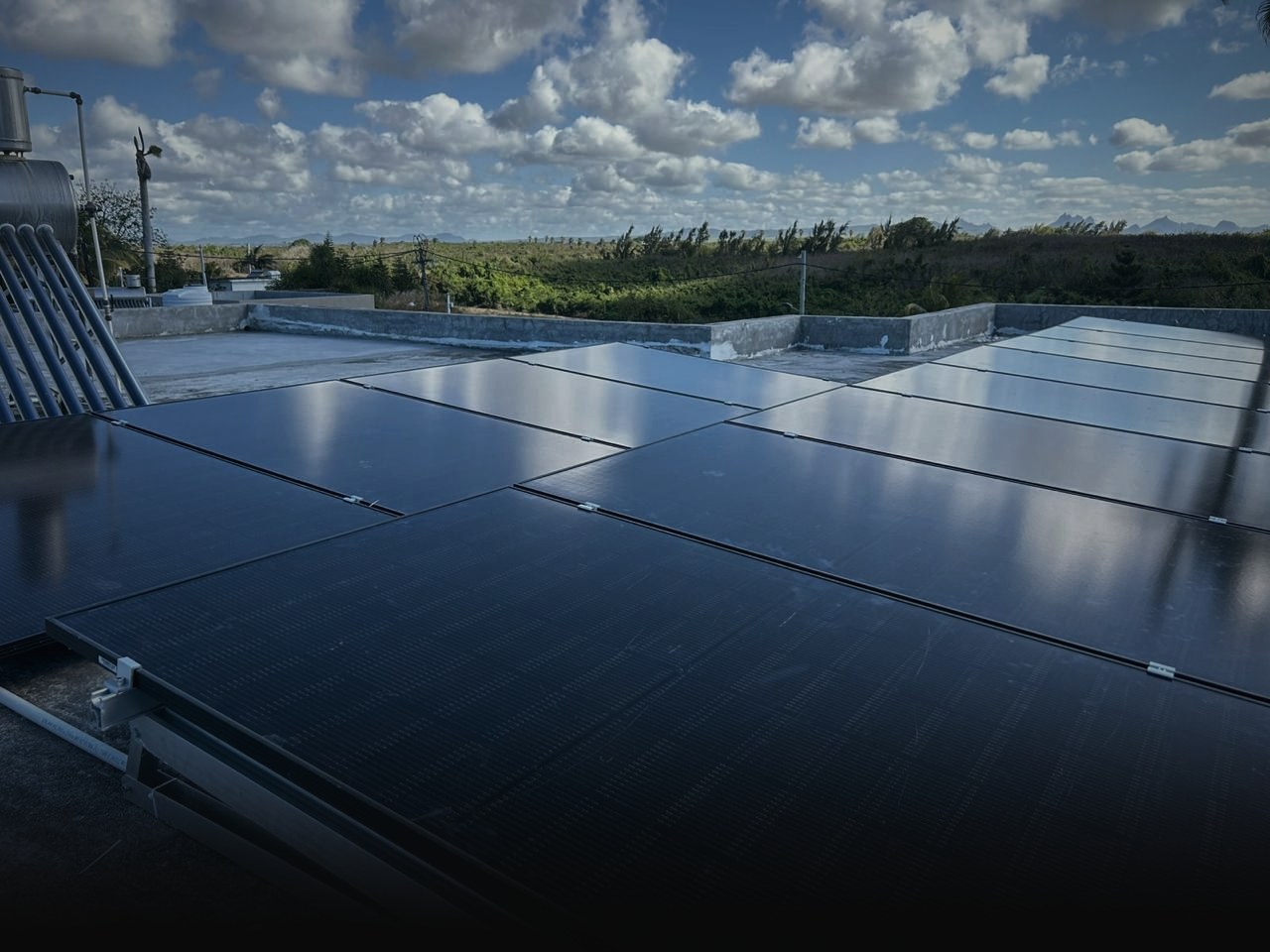
Low-profile panels laid flush across a flat concrete roof — discreet, resilient and dense with power.
This Mauritian home offered a wide, flat concrete roof — and Solarex made the most of every metre. Rather than bulky tilt frames, the modules were laid flush on a low, lightweight rail system, hugging the slab so the array stays hidden from the street and keeps the home's clean lines intact.
A low profile also means a low sail area: far less wind catches the panels, which matters when cyclones cross the island. The flush layout packs the maximum number of modules onto the available roof, and sits neatly alongside the home's solar water heater — turning the whole rooftop into a quiet, hard-working energy surface.
Flush panels keep the home's clean lines intact.
A low profile means far less wind uplift.
Fits the most modules onto the available slab.
Sits neatly alongside the solar water heater.
We map the slab's area, orientation and shading on-site.
A low-profile rail layout is set out to maximise module count.
Modules are fixed flush and secured against wind uplift.
Strings are connected, tested and handed over with monitoring.
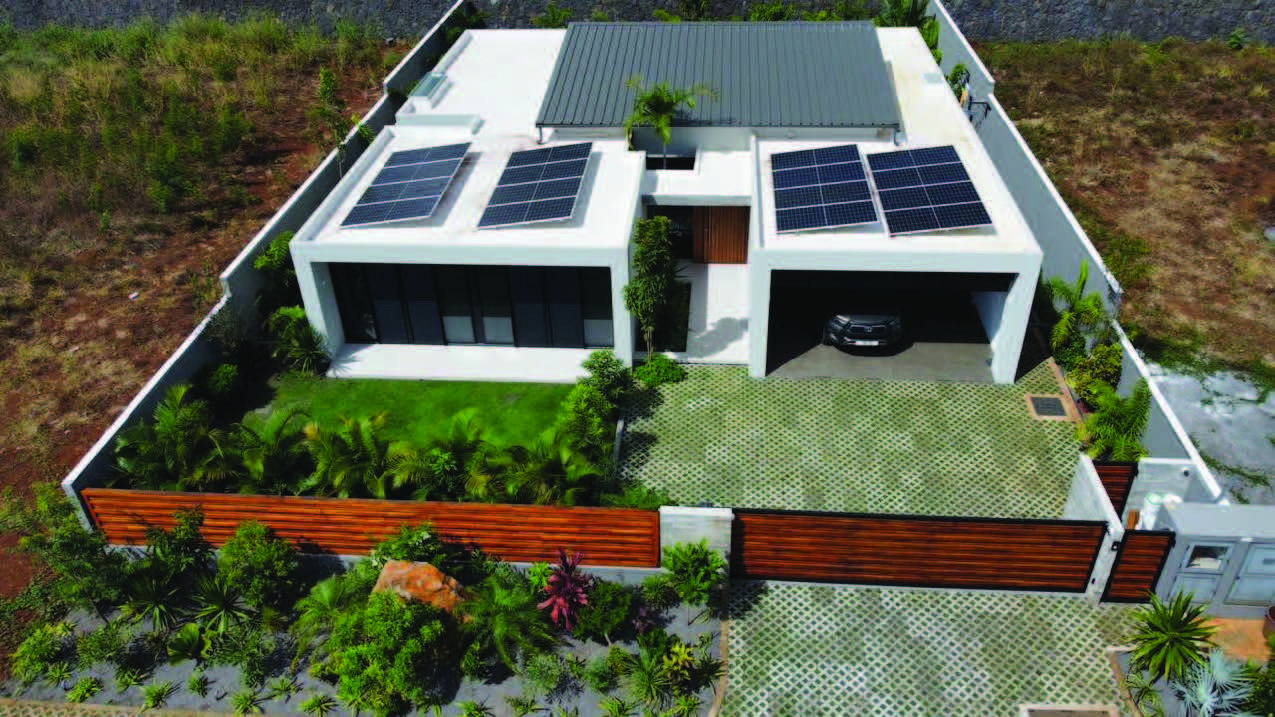
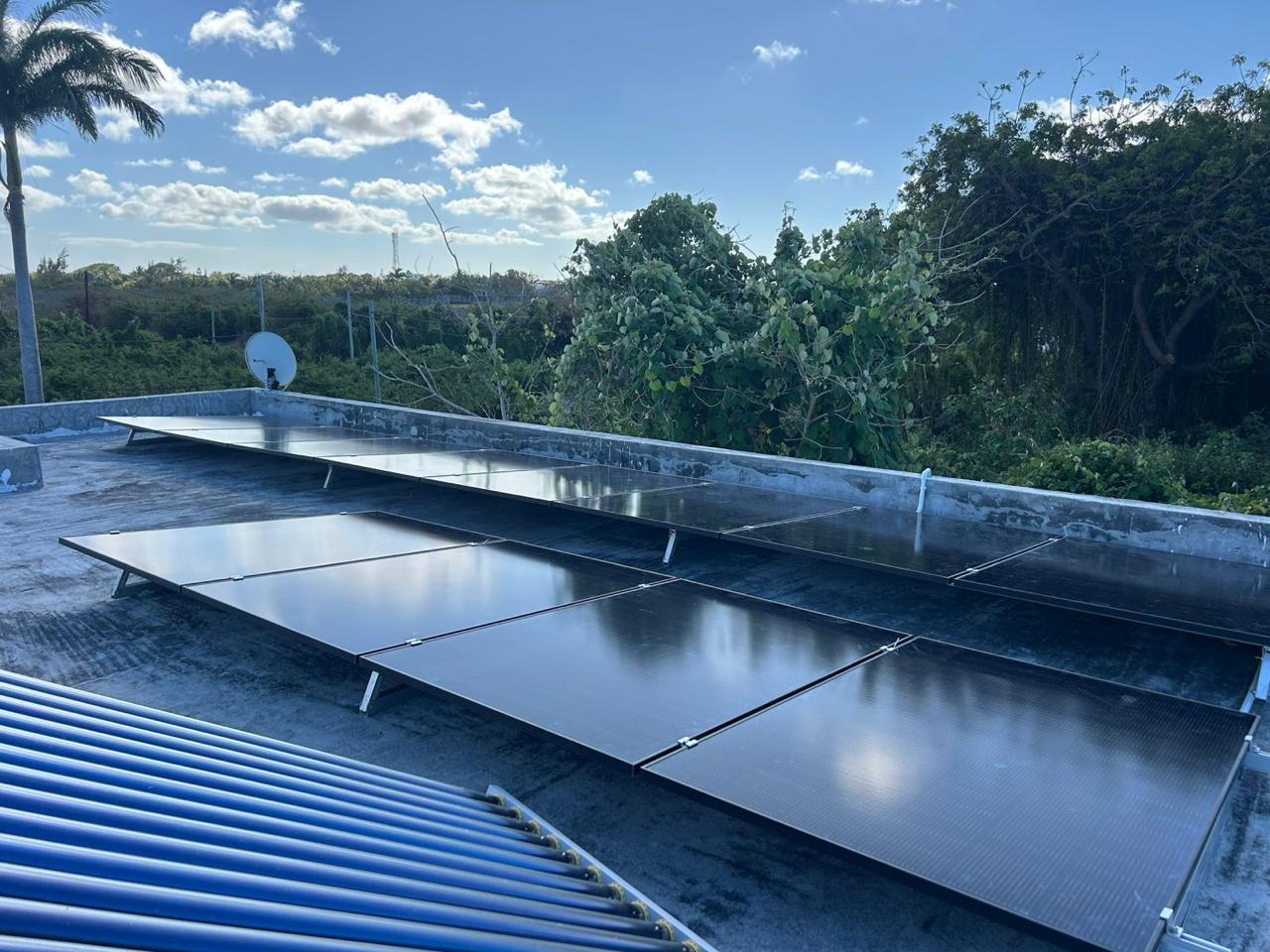
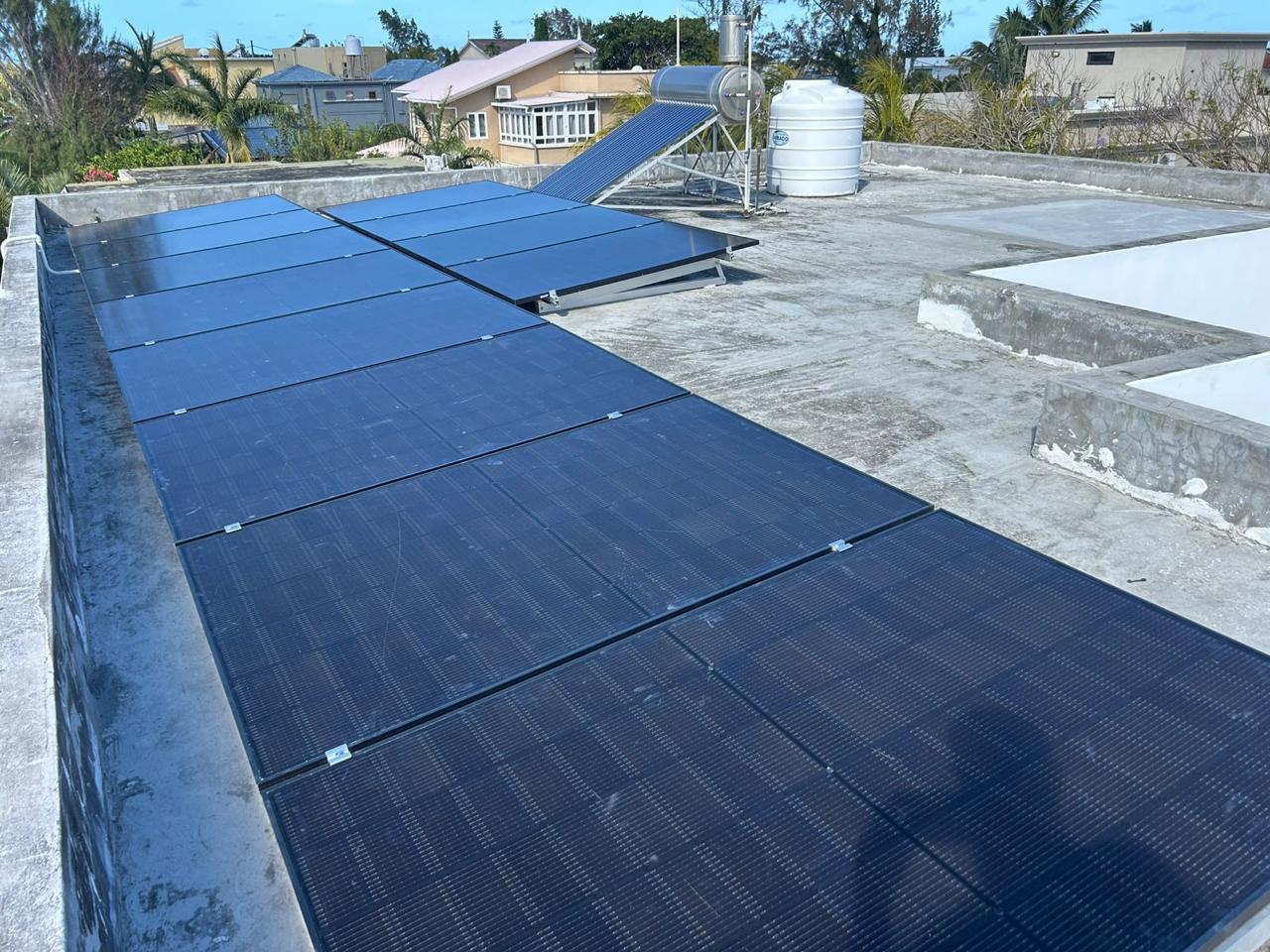
A flush flat-roof array is discreet, sturdy and efficient. Tell us about your roof and we'll design a system that fits seamlessly.