
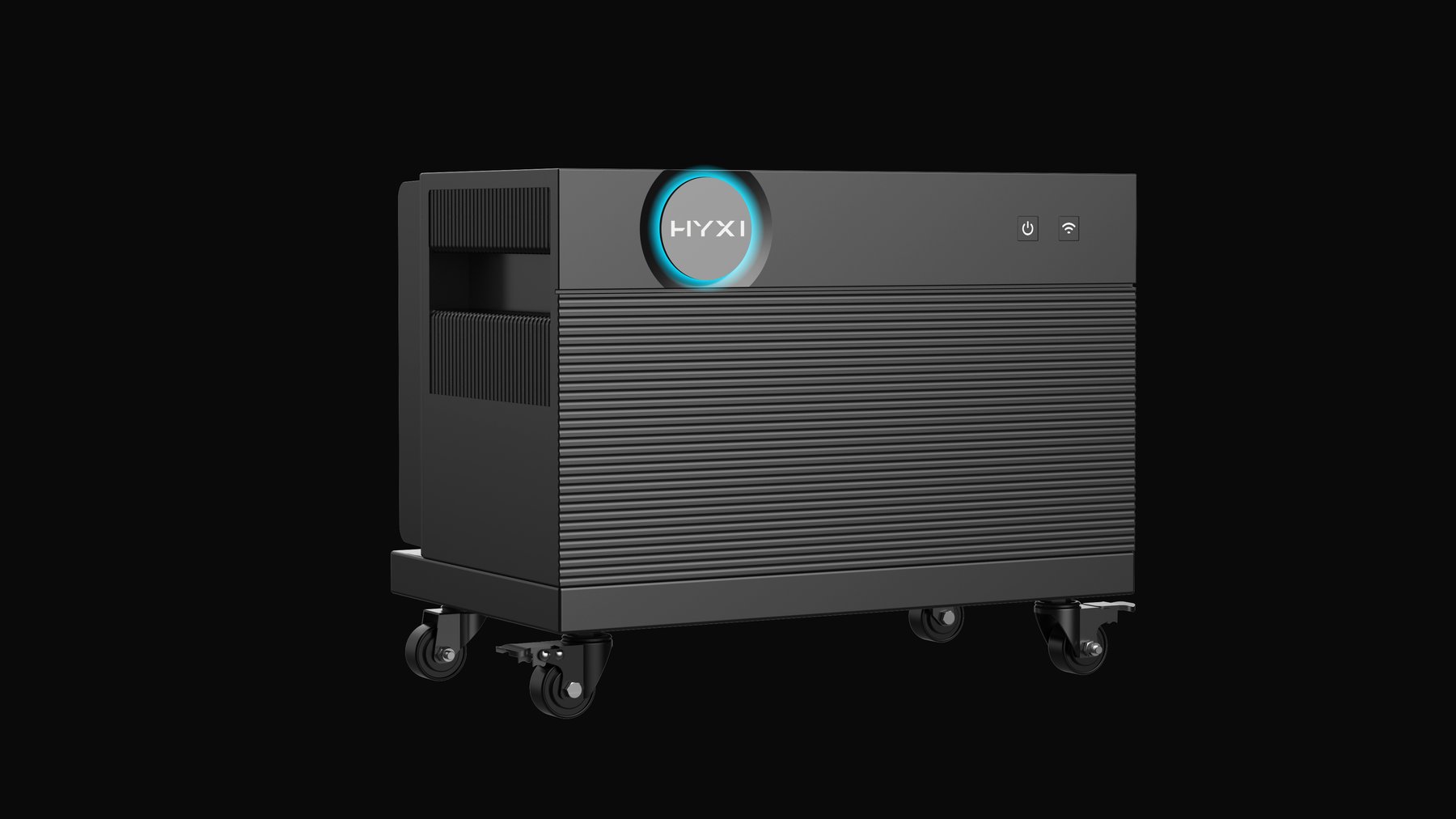
A 5 kWh battery with a 2,500 W inverter inside it, in one plug-in case. It does not care who made your panels or your inverter — it sits alongside them and stores what they were exporting for nothing.
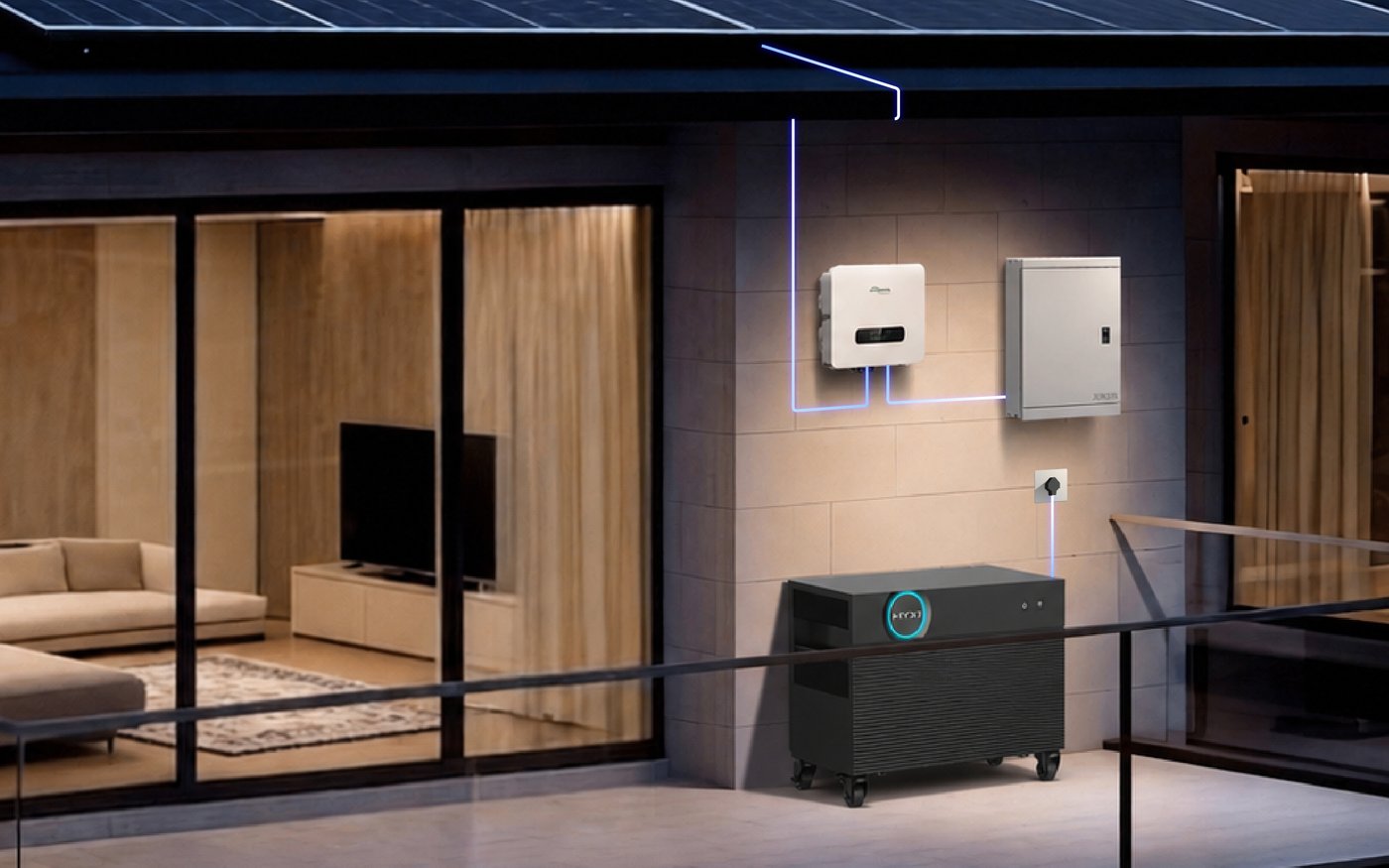
The Halo 5 is AC-coupled, and that one word is the whole product. It connects on the alternating-current side of your installation rather than the direct-current side, so it needs no agreement with your existing inverter, no matching voltages and no DC work on the roof. Any solar system, any brand, any age.
Inside is 5,024 Wh of LiFePO4 and a 2,500 W bidirectional inverter, behind an IP66 case that weighs 42 kg. That 2,500 W is the difference between backing up the essentials and carrying on normally: a washing machine, a microwave and a kettle are all inside it.
Most Mauritian homes with solar are exporting their afternoon surplus and buying it back after dark. This is the smallest change that stops that happening — no re-engineering, no second roof visit, no re-doing the CEB paperwork on a system that already works.
The commonest case on this island: panels fitted years ago, working fine, and every sunny afternoon their surplus goes out to the grid for a fraction of what you buy it back for. The Halo 5 keeps it.
2,500 W continuous, 3,000 VA for ten seconds. Not just the fridge and a lamp — the pump, the microwave, the washing machine you had already started.
No DC work, no roof visit, no touching an installation that has been signed off and working. It plugs in beside what you have.
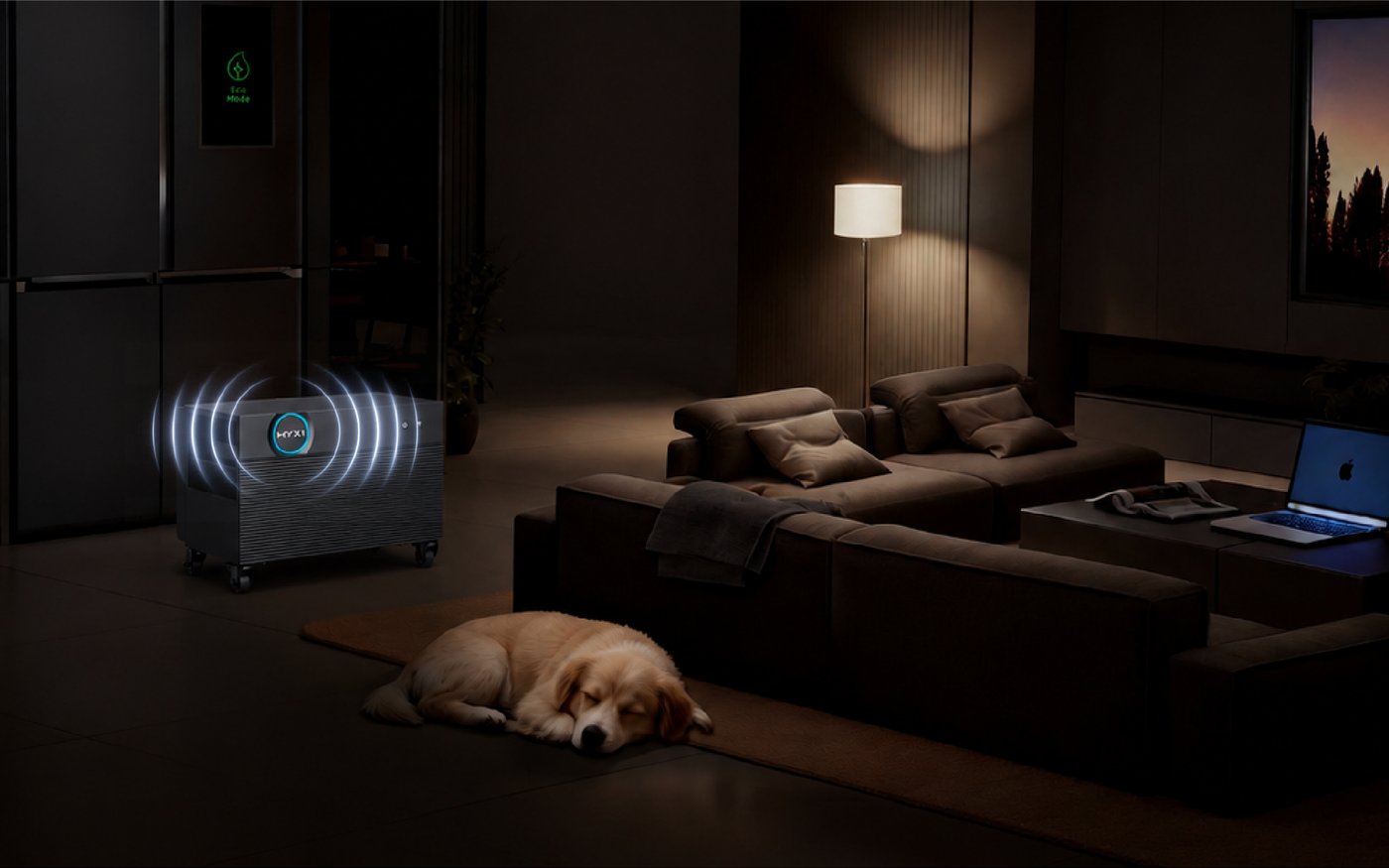
25 dB and cooled by nothing but its own fins. It can live in a hallway, a landing or a bedroom cupboard instead of being exiled outside.
Any inverter, any panel brand, any age — AC coupling means the Halo 5 does not have to agree with any of it. What we do check is your consumption pattern, because that decides whether 5 kWh is the right size or whether you want two.
One AC connection. No DC, no roof, no re-commissioning the system you already have. Then the app: a six-step setup that takes about five minutes, and we do it with you rather than emailing you a manual.
The unit watches when you generate and when you spend, and shifts the surplus across that gap by itself. You get a light ring that reads the state of charge from across the room, and an app if you want the detail.
A DC-coupled battery has to be electrically compatible with the inverter it lives behind — the same voltage window, often the same manufacturer, sometimes the same model year. That is why so many quotations for "adding a battery" turn into quotations for replacing the whole system.
AC coupling side-steps the question. The Halo 5 has its own inverter, so it meets your installation at 230 V like any other appliance. Your existing system keeps running exactly as it was commissioned, and keeps its warranty.
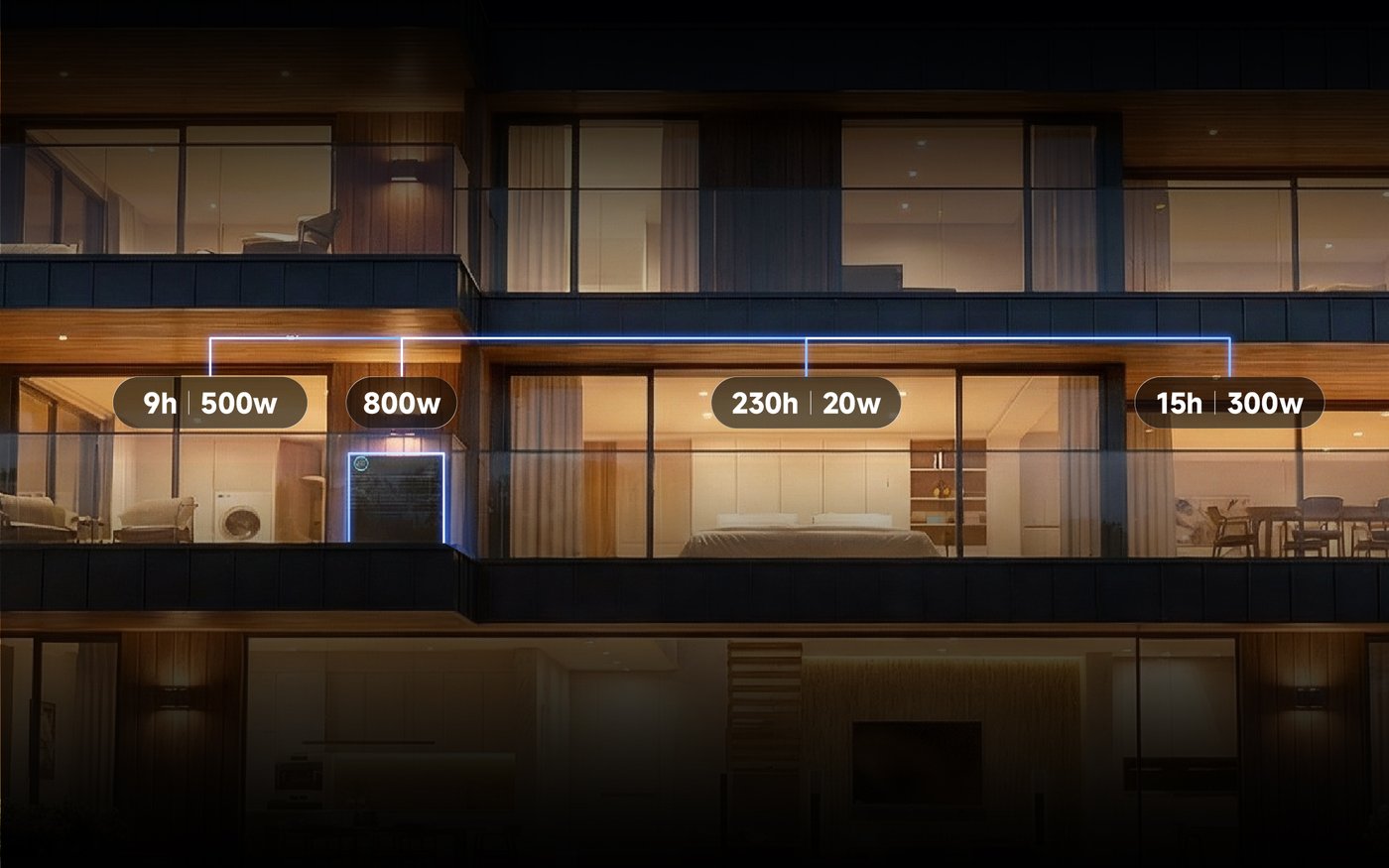
The useful number is not the 5 kWh, it is the 2,500 W. Plenty of small batteries hold a reasonable amount of energy and can only release it slowly, which is why they run lights and a router and trip on a kettle.
2,500 W continuous carries a fridge, the lights, fans, a television and a washing machine at the same time, and 3,000 VA for ten seconds covers the surge when a motor starts. In practice that is the difference between a house that is "on backup" and a house where nobody notices.
Indicative, not a survey: what you actually get depends on your appliances and how long the cut lasts. We size it against your real load before quoting.
IP66, 5–95 % humidity, and rated to +55 °C, with no fan and no filter — the two parts that fail first in a Mauritian summer. Hyxipower also rate it to −20 °C with self-heating, which is a specification this island will never test.
Five layers of protection over automotive-grade A+ cells, with an aerosol suppressant sealed inside the case. At 25 dB it is quieter than the fridge it is backing up.
| Battery | |
|---|---|
| Chemistry | LiFePO4 |
| Nominal energy | 5,024 Wh |
| Nominal voltage | 16 V |
| Max. charge / discharge power | 2,500 VA / 2,500 VA |
| Cycle life | ≥ 10,000 (25 °C, to 60 % capacity) |
| Output — off-grid | |
| Rated output power | 2,500 W |
| Max. output power | 3,000 VA for 10 s |
| Output voltage / frequency | 220 / 230 / 240 V, 50 / 60 Hz |
| THDi (linear load) | < 3 % |
| Output — on-grid | |
| Nominal output apparent power | 800 W default / 2,500 W* |
| Max. AC output apparent power | 2,500 VA |
| Max. AC input apparent power | 2,500 VA |
| Voltage range | 183 – 276 V |
| Power factor | > 0.99 default, 0.8 lead – 0.8 lag adjustable |
| Physical and environmental | |
| Dimensions (W × H × D) | 460 × 279 × 279 mm |
| Weight | 42 kg |
| Ingress protection | IP66 |
| Operating temperature | −20 to +55 °C |
| Humidity | 5 – 95 %, non-condensing |
| Altitude | 3,000 m |
| Cooling | Natural convection — no fan |
| Noise | 25 dB |
| Communication | Wi-Fi and Bluetooth · LED and app |
| Standards | |
| Safety | IEC 62109-1 / -2 |
| Cells and transport | IEC 62619, UN 38.3 |
| Grid connection | VDE4105, IEC 61727 / 62116, CEI 0-21, EN 50549-1, G98, C10-11 |
| Model | HYX-MS5000AC |
* The 2,500 W on-grid setting is a premium function: enabling it must comply with local regulations and may only be done by authorised personnel. Figures are from the Hyxipower HYX-MS5000AC datasheet V1.8 and are subject to change without notice.
Almost certainly, and that is the point of it. AC coupling means the Halo 5 connects on the mains side rather than to your panels or your inverter, so brand, age and voltage do not have to match. We confirm it against your actual installation before quoting — but the answer is usually yes, and usually without touching the roof.
The Halo PV has four solar inputs of its own, so it can generate as well as store — the right answer when there is no existing system, or none worth keeping. The Halo 5 has no PV inputs and more power: 5 kWh and 2,500 W against 3 kWh and 1,500 W. If you already have solar, this is the one.
The datasheet describes the Halo 5 as a single unit and documents no expansion pack, so we will not promise you one. What we would do instead is size the first one properly, and if a household genuinely needs more than 5 kWh we would look at a low-voltage stack rather than sell you something that cannot grow.
Yes, within 2,500 W. A 12,000 BTU inverter split settles at roughly 1,000–1,200 W and asks for more on start-up, which the 3,000 VA ten-second peak is there for. We check the start-up current of the actual unit rather than answer by category.
It changes over on its own and starts recharging from whatever is available — your panels first, the grid if there is nothing else. There is nothing to switch and nothing to reset.
Indoors or under cover, on a flat floor, near the consumer unit. IP66 means rain and dust do not bother it, but shade and shelter extend the life of any battery in this climate. It is 42 kg, so it is a two-person lift and it stays where you put it.
Send us a recent CEB bill and, if you have solar already, roughly what it produces. We will tell you whether a Halo 5 pays for itself on your roof — and say so if it does not.
Request a quote