
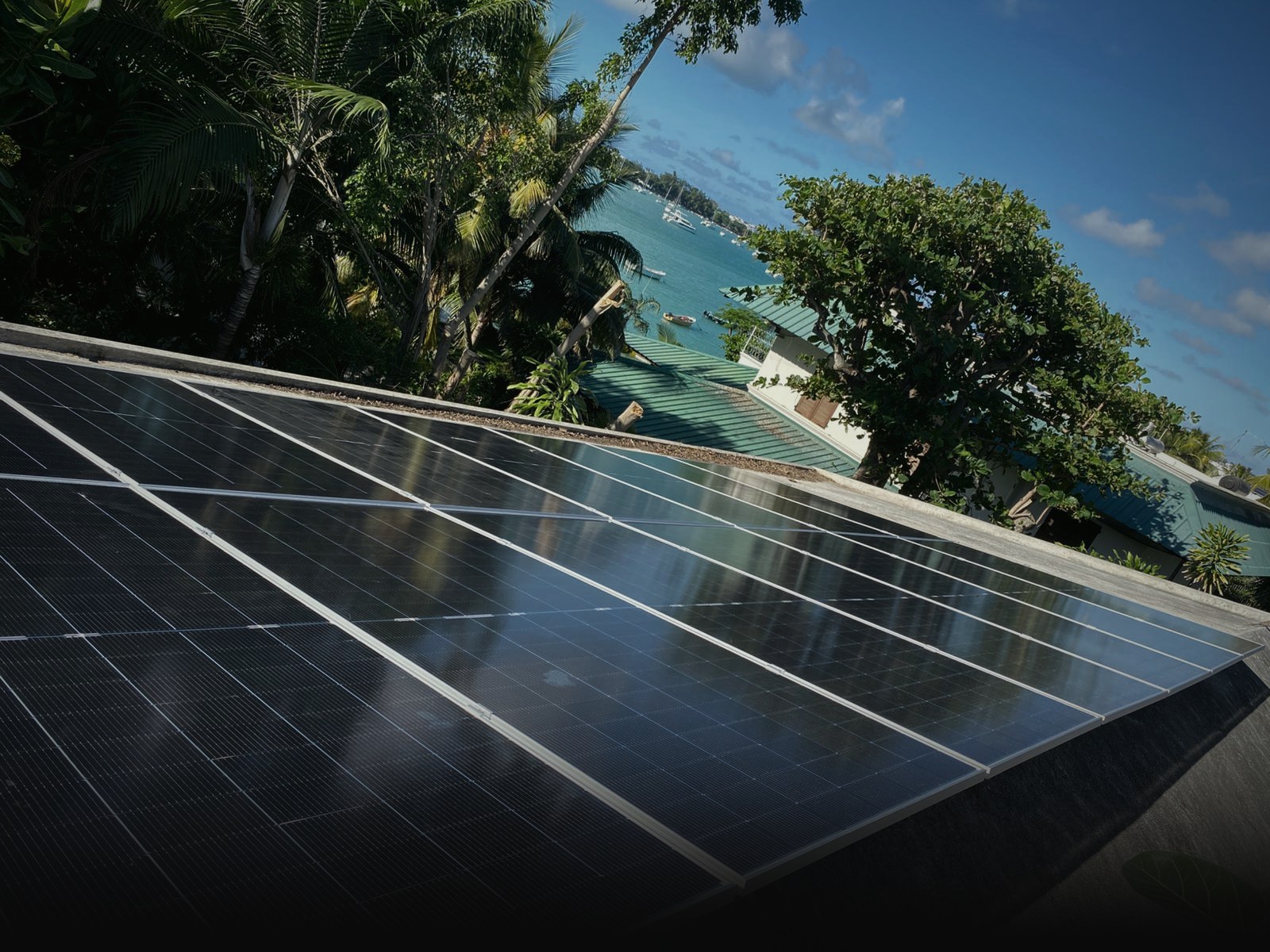
What a PV system is made of, what it yields on a Mauritian roof, and how the numbers on a quotation are actually arrived at.
"Photovoltaic" is simply Greek and Latin bolted together: light, and volts. A PV cell is a wafer of silicon treated so that its two faces have different electrical characters. When a photon strikes it and knocks an electron loose, the junction between those two faces pushes the electron in one direction rather than letting it wander back. Do that across a whole wafer and you have a current. Wire sixty or more wafers together behind glass and you have a panel.
There are no moving parts anywhere in that description, which is why a photovoltaic system is such an unusually durable machine — and one of the few sustainable energy technologies that asks almost nothing of its owner once it is running. Panels degrade slowly and predictably rather than wearing out; the components that actually fail are the electronics, and those are replaceable without touching the roof.
It is worth separating PV from the other solar technology on Mauritian roofs. A solar water heater is thermal — it moves heat into a tank and produces no electricity at all. A photovoltaic system produces electricity and does not heat your water directly. Many houses here have both, on the same roof, doing entirely different jobs.
A PV system is rated in kilowatt-peak (kWp) — what the array would produce under standard test conditions. It is a comparison figure, not a promise: real output depends on the sun, the temperature, the orientation and how clean the glass is.
Nothing to wear out — panels degrade, they don't break down.
Mauritian irradiance is steady enough to model honestly.
The same technology scales from 3 kW to a megawatt.
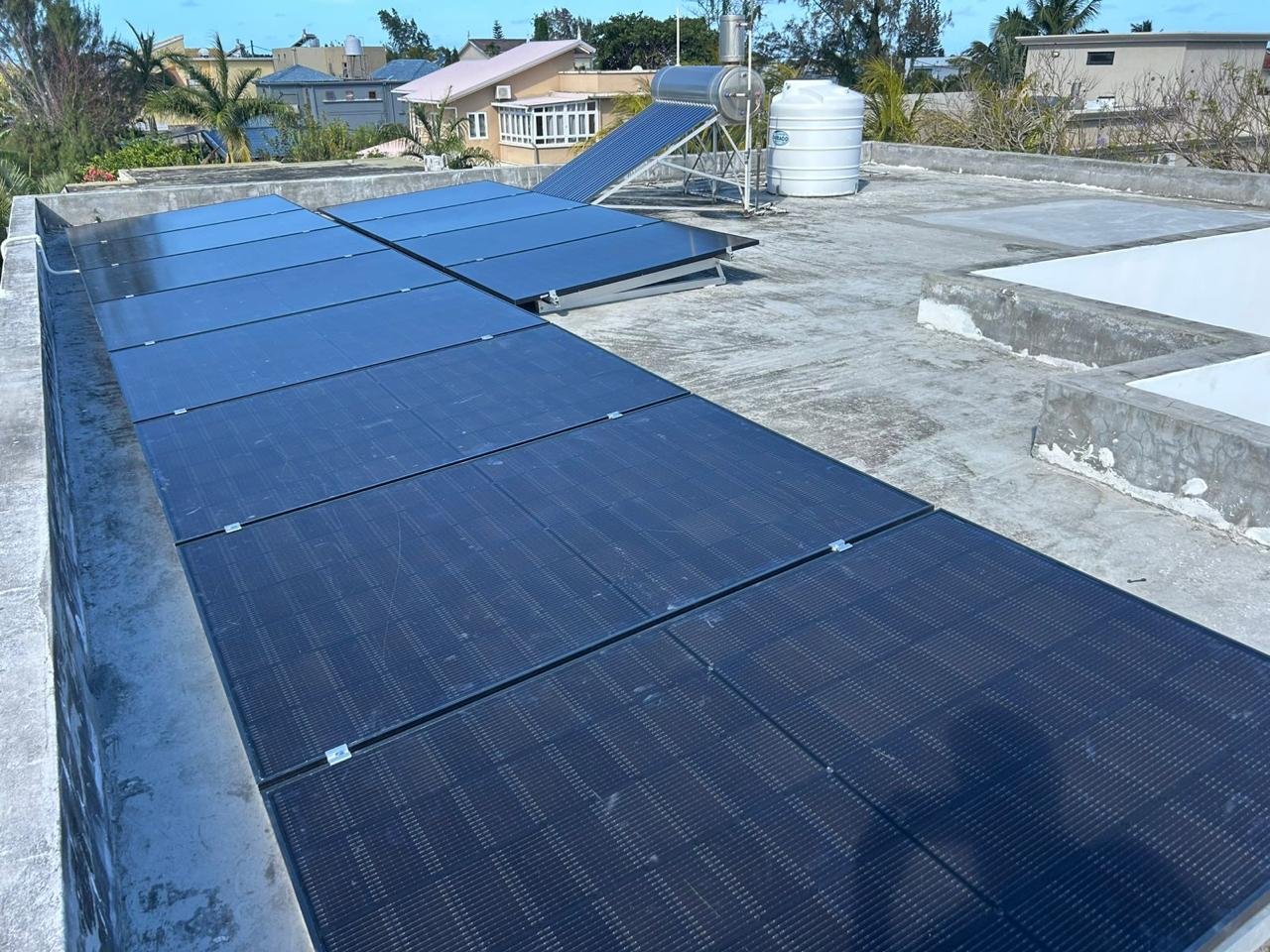
Strip away the marketing and every photovoltaic system on the island is the same four components, sized differently.
| Component | What it does |
|---|---|
| Panels | Convert light to DC electricity. Rated in watts each, and in kWp for the array. |
| Mounting | Holds the array to the roof through a cyclone, and off the surface so air can move behind it. |
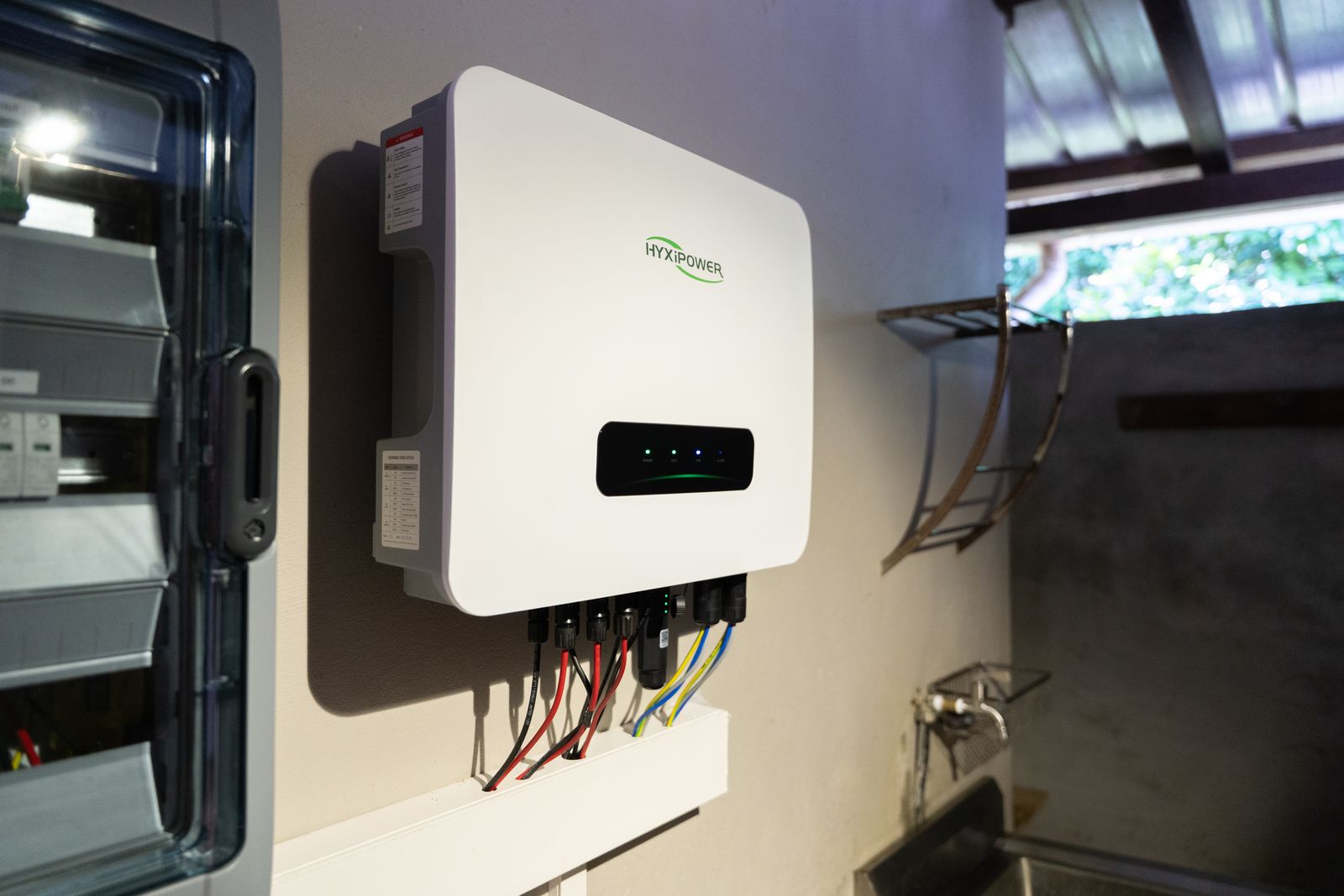
| Inverter | Converts DC to the AC your building uses, and tracks the array's best operating point. |
| Protection & metering | DC and AC isolation, surge arrest, earthing, and the meter that records what you generate. |
Add a battery to that list and the system becomes a hybrid one. Remove the grid connection and it becomes off-grid. Everything else on a quotation — rails, clamps, cable, breakers, labour — exists to hold those four together safely.
Mauritius receives enough irradiance for a well-oriented array to deliver about 4.5 kWh per installed kWp per day averaged across the year. A 10 kWp system therefore produces roughly 45 kWh on an average day, or something near 16,000 kWh a year.
Not all of that displaces a purchased unit. Some arrives when nobody is home. We model roughly 85% of generation as replacing electricity you would otherwise have bought — the rest is exported or simply not needed at that moment. A battery is what moves that percentage upward.
Multiply the displaced units by the tariff and you have the saving. We use an estimate of Rs 8.50 per kWh, raised from Rs 6.50 after the CEB revision of May 2026. Those three figures — yield, self-consumption and tariff — are the whole model, and they are the same three our calculator and our quotations use. We would rather show them than quote a saving and leave you guessing where it came from.
Roof structure, orientation, shading and the state of the existing electrical installation — measured on site, not estimated from a satellite photo.
Array layout, string configuration, inverter selection and the protection schedule — sized to your load profile rather than to your roof area.
We prepare and lodge the CEB paperwork for any system that stays connected. It is part of the scope, not an extra line on the invoice.
Mounting, panels, DC and AC works, testing and handover — with monitoring configured so you can see the system working from day one.
In everyday use they mean the same thing. Strictly, "solar" covers any technology that harvests the sun — including solar water heating, which produces heat and no electricity. "Photovoltaic" is specifically the electricity-generating kind. When someone in Mauritius says "solar panels" they almost always mean PV; when they say "solar water heater" they mean the thermal one.
Divide the system size by the panel wattage. With modern 620 W bifacial modules, a 10 kWp array is about 16 panels, and each occupies a little over 2 m² of roof. But the honest answer starts from your consumption, not your roof: size the system to the electricity you actually use, then check the roof can hold it. Our calculator does the first half in a minute.
Yes, at reduced output — a PV cell responds to light, not to heat or to direct sun alone, so an overcast Mauritian day still produces a meaningful fraction of a clear one. High temperatures actually reduce panel efficiency slightly, which is why we mount arrays with air space beneath them.
Very little, and most of it is cleaning. On a pitched roof, rain does much of that for you. Coastal sites need more attention because salt film builds up on the glass, and any site near dust or vegetation benefits from a scheduled wash. Beyond that it is periodic electrical inspection and watching the monitoring for a panel that has quietly stopped pulling its weight.
It is designed to. The panels are rarely the weak point — the mounting and its fixing into the roof structure are. That is why every installation starts with a structural assessment, why we specify corrosion-resistant fixings for coastal sites, and why the mounting method changes between a concrete flat roof and a tin pitched roof. We have been installing through Mauritian cyclone seasons since 2013.
On a grid-connected system it is exported. On a system with storage it charges the battery first and exports only what is left, which is why storage raises the share of your own generation that you actually consume. On an off-grid system there is nowhere to export to, so the surplus is simply not harvested once the battery is full.
Start with your last CEB bill. The calculator turns it into a system size, a cost and a saving — using the same three constants set out above.