
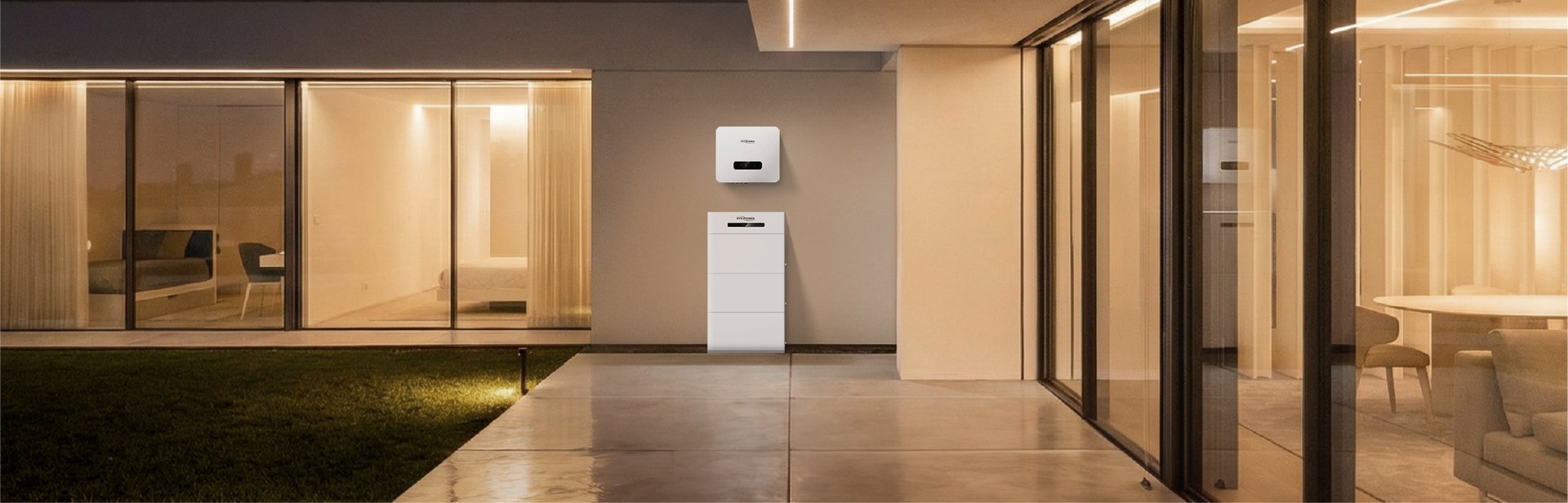
From a single 5 kWh wall pack to a 5 MWh container — LiFePO4 and high-voltage battery energy storage, supplied, installed and warranted across the island.
Solar panels only generate while the sun is on them. In Mauritius that works out at roughly 4.5 kWh per kW of array per day, and almost all of it arrives between nine in the morning and four in the afternoon — which is precisely when most households are empty. The heaviest demand comes later: the air conditioning, the oven, the water heater, the lights, all in the evening.
A solar battery closes that gap. It stores the surplus your panels make at midday and gives it back at eight in the evening, so the energy you paid for is the energy you use. Without storage, a grid-tied system exports its excess and buys it back later at the retail tariff. With storage, it does not have to.
Battery energy storage is also what turns a solar installation from a bill reduction into an energy supply. When the CEB grid goes down, a system with batteries and a hybrid inverter keeps your circuits live. A system without them switches off with everybody else.
We size storage from your own consumption profile rather than from a catalogue — how much you use, when you use it, and how long you want to ride through an outage. That number, not the size of your roof, is what decides the battery.
Midday surplus spent in the evening instead of exported.
Paired with a hybrid inverter, your circuits stay live.
Start with what you need; stack more packs later.
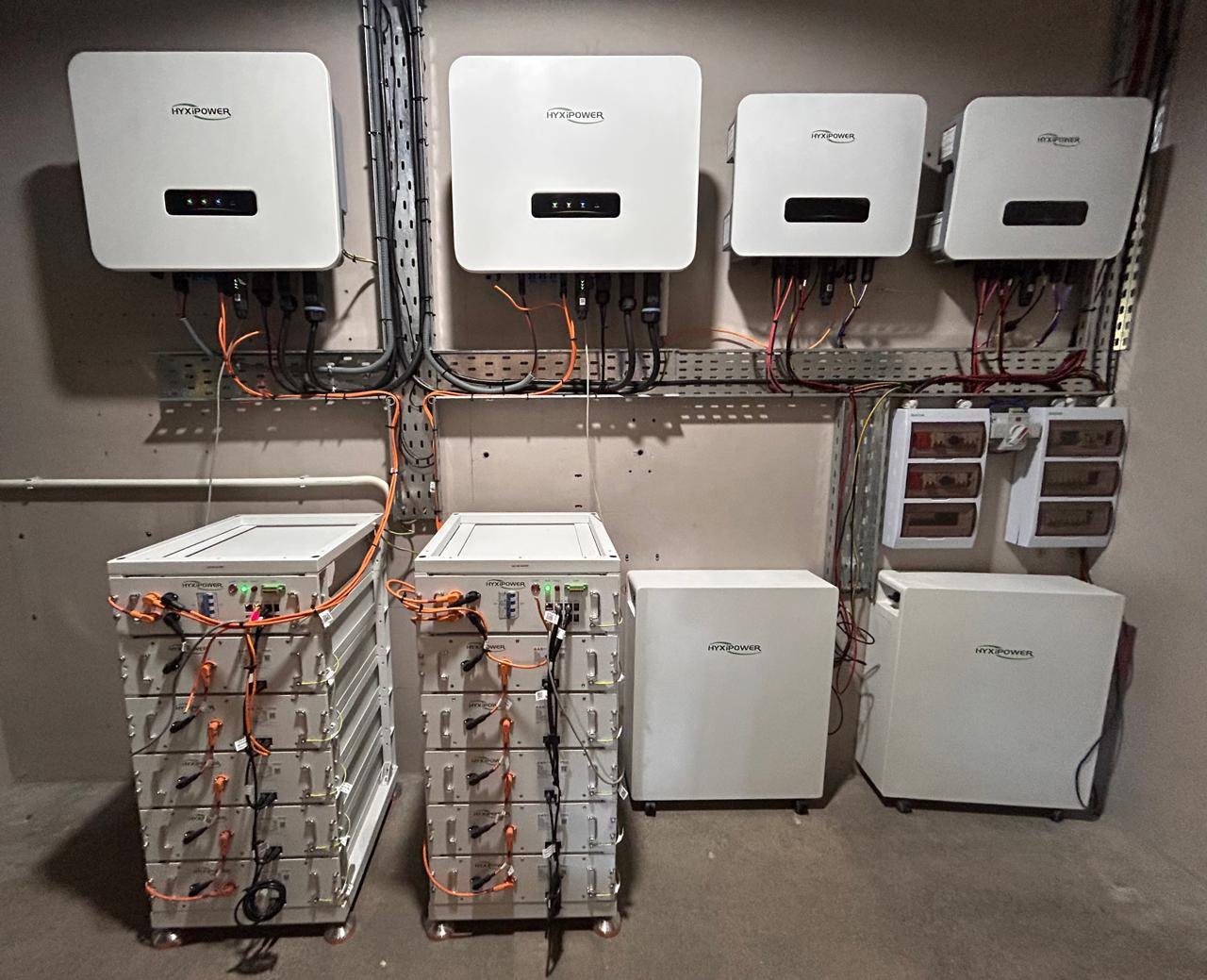
A solar battery talks to the inverter over a DC bus, and that bus is either low voltage — around 48 V — or high voltage, from roughly 400 V upward. It is the single most consequential choice in a storage system, and most quotations never mention it.
Low voltage is simpler, cheaper per kWh at small sizes, and entirely right for a house storing 5 to 20 kWh. High voltage moves the same energy at a fraction of the current, so the conversion runs more efficiently, the cabling is thinner, and the stack keeps scaling long after a low-voltage bank has run out of room.
The equipment warranty follows the bus. Our low-voltage systems carry five years on panels, inverter and battery; our high-voltage systems carry ten. That is not a sales position — it is what the two customer leaflets say, and the matching leaflet travels with every quotation we send.
| Low voltage | High voltage | |
|---|---|---|
| DC bus | ~48 V | 400 V and up |
| Typical capacity | 5 – 20 kWh | 20 kWh and beyond |
| Best suited to | Homes and small businesses | Large villas, commercial and industrial |
| Equipment warranty | 5 years | 10 years |
A high-voltage stack of two or more batteries also takes a disconnect controller, which we include automatically — it is a safety requirement, not an upsell.
A battery management system is the electronics living inside the pack, and it is the reason a modern lithium battery is a safe thing to hang on a wall. It measures the voltage, current and temperature of every cell group, thousands of times a minute.
Its first job is balancing. Cells drift apart as they age, and an unbalanced pack is limited by its weakest cell — the BMS trims the strong ones so the whole pack keeps its capacity for years rather than months. Its second job is refusing: it will not let the pack charge when it is too cold, discharge when it is too flat, or continue at all when a cell reads wrong. It opens the contactor and tells the inverter why.
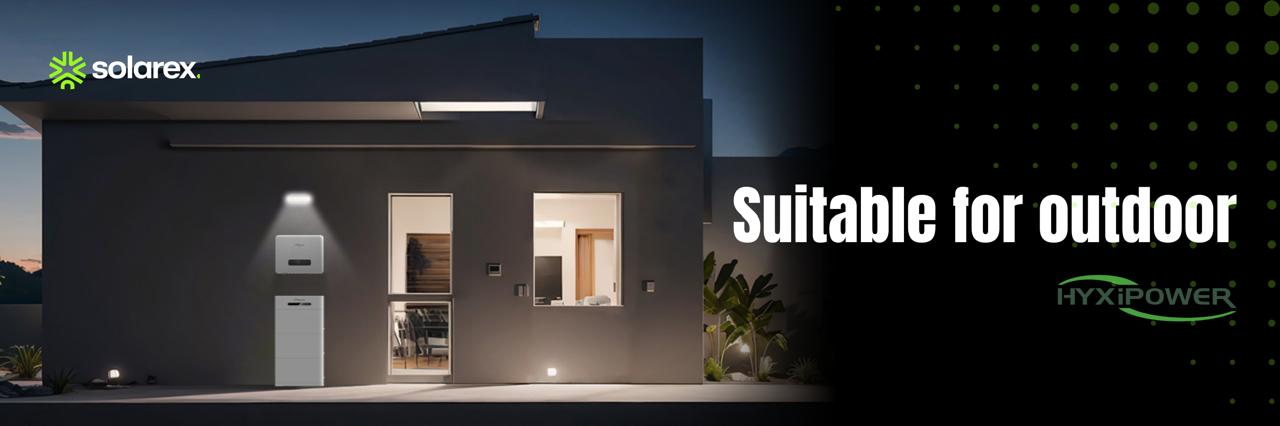
Solarex is a Hyxipower partner in Mauritius. The same four families cover a studio flat and a factory — what changes is the bus, the cooling and the cabinet.
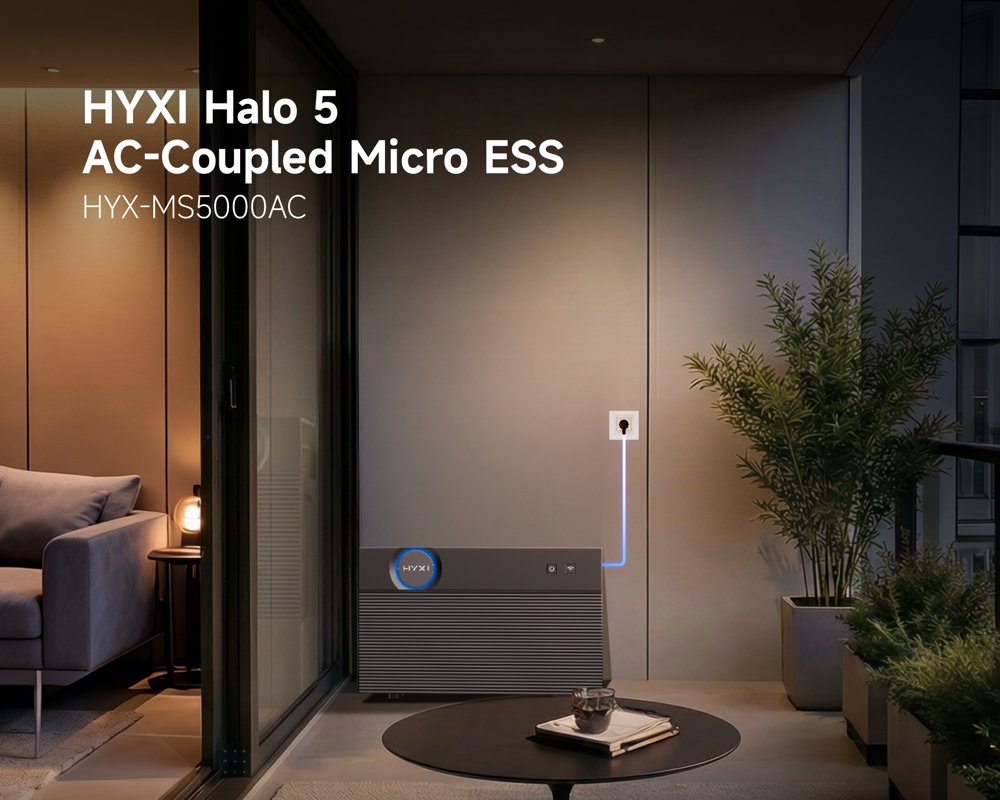
Plug-and-play AC-coupled home battery with a built-in inverter — installed in minutes and expandable with extra packs.
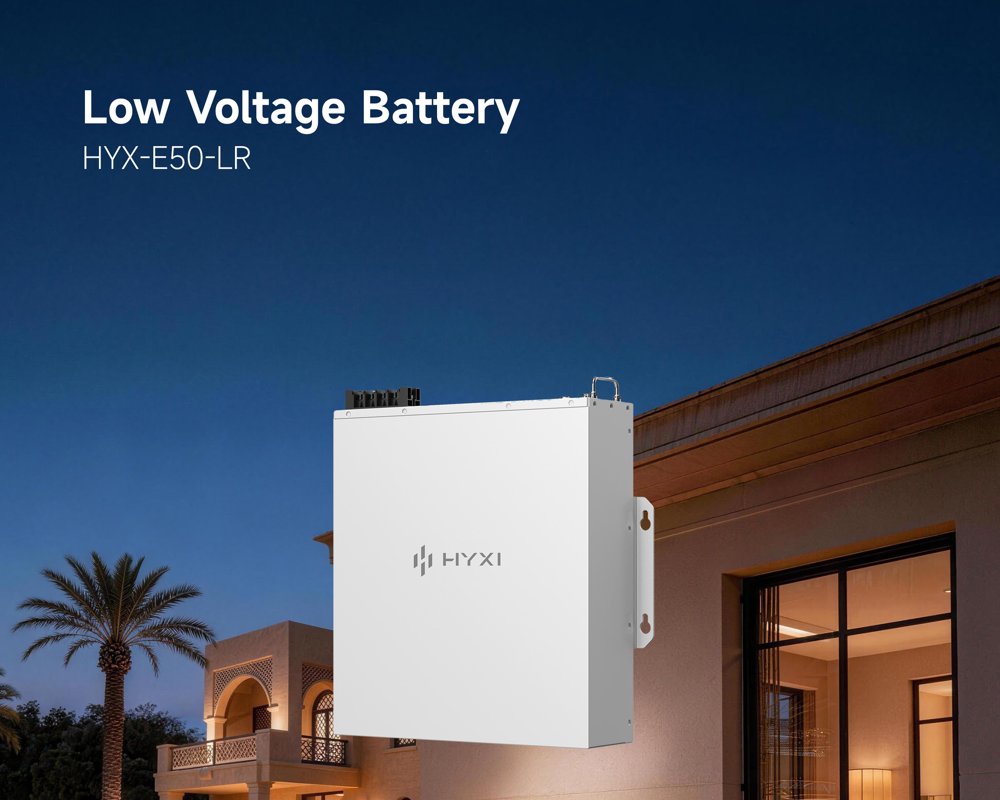
High-capacity, wall-mounted LiFePO4 battery — modular, simple to install and built to scale with your needs.
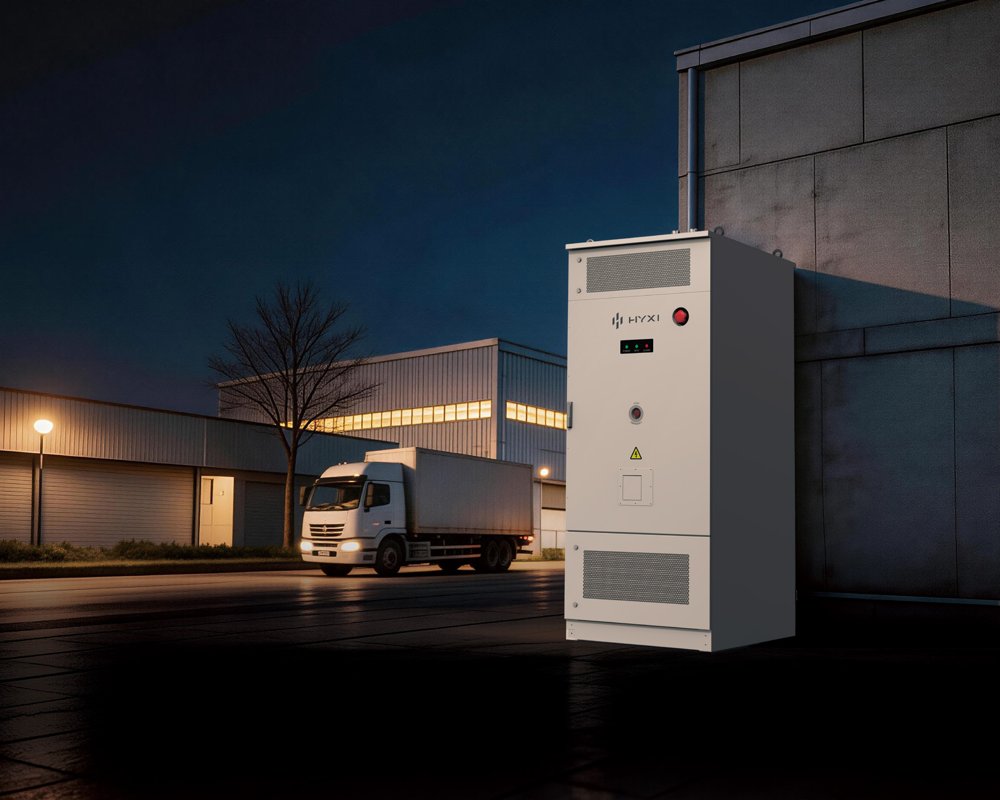
Liquid-cooled commercial battery cabinet with automotive-grade cells, auto fire-suppression and a smart energy management system.
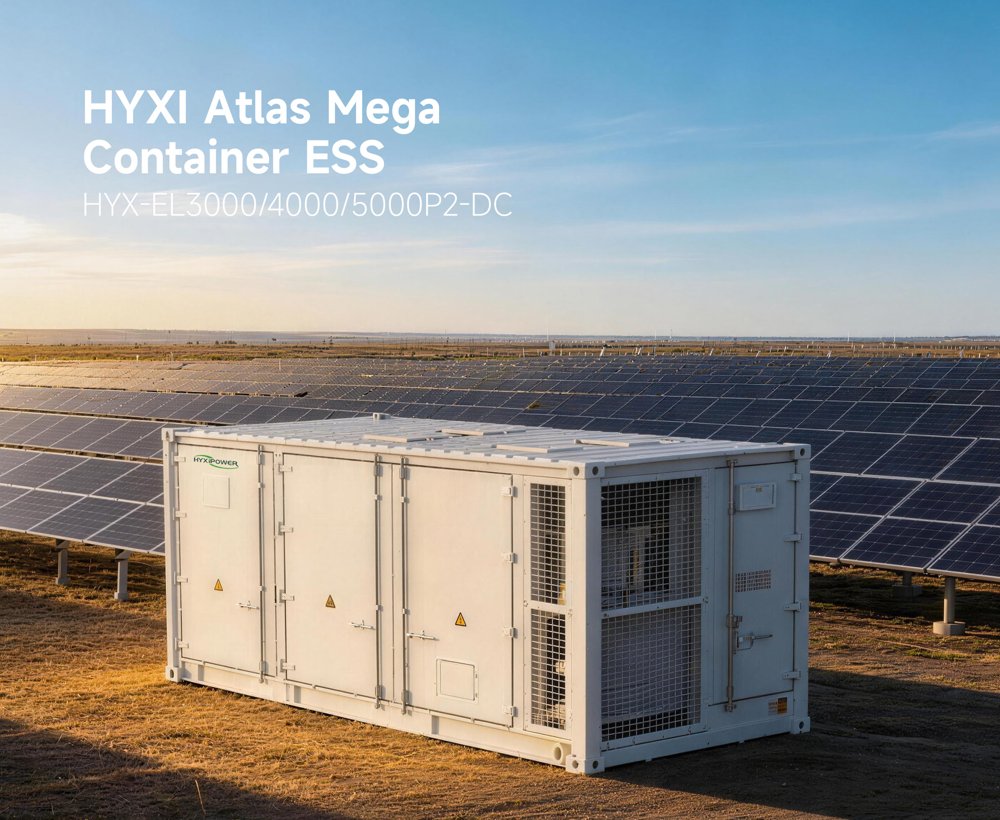
Containerised utility-scale storage with six-sided fire protection and high round-trip efficiency — grid-ready power at scale.
Your CEB bills give us the annual kWh. The shape of the day — when you actually use it — decides how much of that a battery can catch.
How long should the house run with no sun and no grid? An evening, a night, or three cloudy days — each answer is a different battery.
Capacity and inverter together decide low or high voltage. We will not put a high-voltage battery behind a low-voltage inverter — they do not pair.
Mounting, DC protection, BMS commissioning and the inverter link, then a handover with the monitoring app on your phone.
For most Mauritian homes the useful answer is between 10 and 20 kWh — enough to carry the evening and the night on stored solar. Going bigger only pays if you are also chasing autonomy through cloudy days, or if you are off-grid entirely. Our solar calculator gives you a first estimate from your monthly bill in about a minute.
LiFePO4 cells are rated in cycles rather than years, and the packs we install are rated for several thousand full cycles — a decade or more of daily use. Our equipment warranty is five years on low-voltage systems and ten years on high-voltage systems, which is the honest floor rather than the expected life.
Usually yes. If your existing inverter is a hybrid, a battery can often be added directly to its DC input. If it is a plain grid-tied inverter, the simplest route is an AC-coupled battery with its own inverter built in, which sits alongside the system you already own rather than replacing it. We will tell you which case you are in before quoting.
With a hybrid inverter, yes — the system disconnects from the grid and keeps your circuits live from the battery. It matters that this is designed in from the start: a battery on its own does not create backup, the inverter does. We agree which circuits stay up before installation, because backing up the whole house costs more than backing up the parts that matter.
A car battery is built to deliver a very large current for a few seconds and is damaged by deep discharge. A solar battery is built to be emptied and refilled every single day for years. The chemistry is different, the cells are different, and the battery management system that protects them has no equivalent under a car bonnet.
LiFePO4 is the most thermally stable of the common lithium chemistries, which is why it is the one used for stationary storage rather than the higher-density chemistries used in phones. Combined with a certified BMS, correct DC protection and the right mounting location, it is safe indoors — and the units we install are IP-rated for outdoor walls as well.
Tell us what you use and when, and we will quote the storage that fits it — with the bus, the warranty and the price all stated on the same page.