
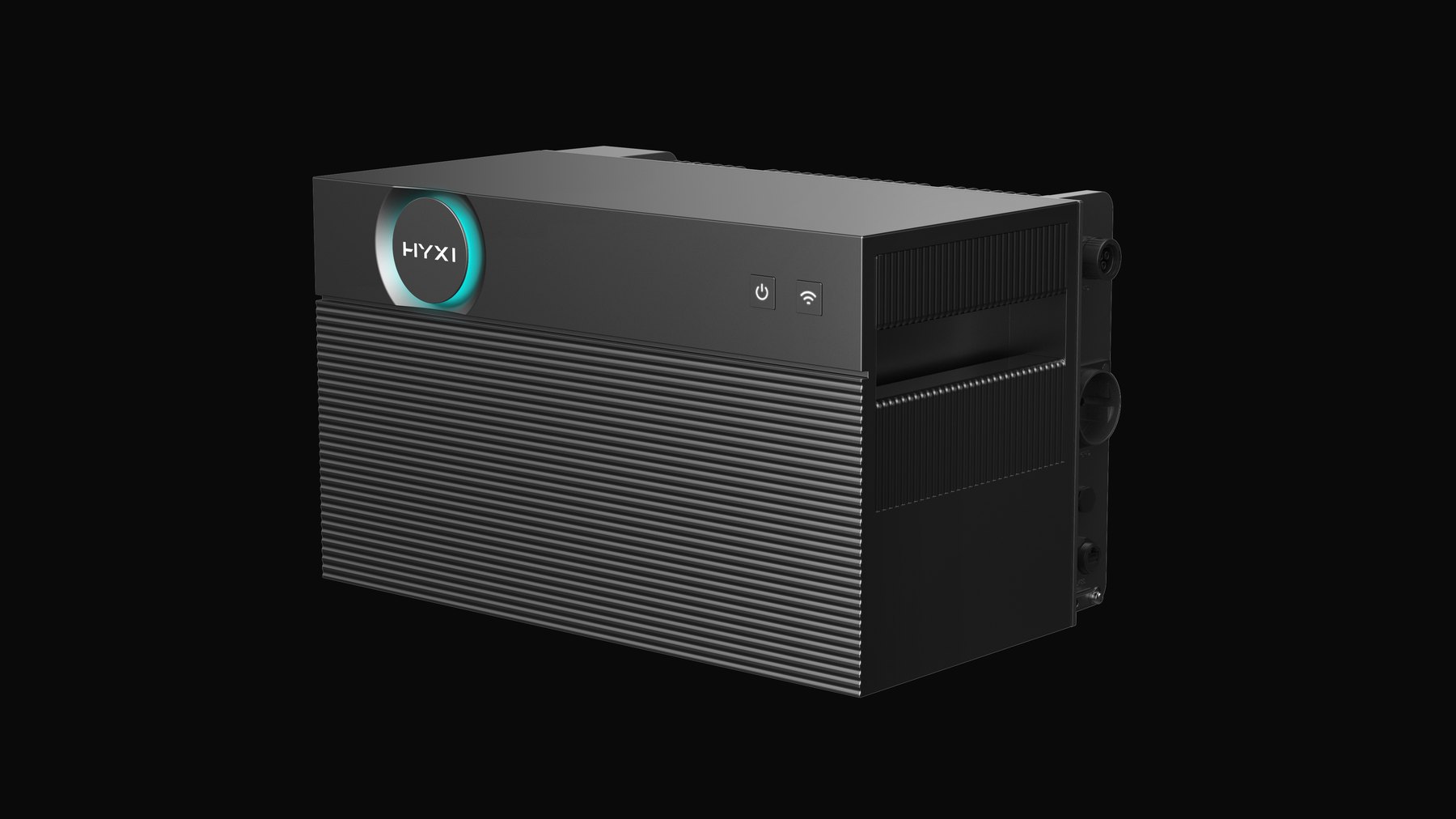
A 3 kWh storage system with its own inverter and four solar inputs, in one case you can carry. No switchboard work, no roof contract — it plugs into a socket, and the essentials keep running when the grid stops.
The Halo PV is a complete energy system behind a single door: LiFePO4 cells, a 1,500 W bidirectional inverter and four independent solar inputs, sealed in an IP66 case that weighs 28.5 kg. Home storage normally asks for a switchboard rewire, a roof survey and a licensed crew for a day. This asks for a socket.
That makes it the smallest sensible way into solar storage in Mauritius — and the only one that suits a rented house, an apartment, or a building whose roof is not yours to drill. Connect up to four panels and it charges from the sun. Connect none and it still charges from the grid and holds that power in reserve for the next cut.
It is the entry point to the same Hyxipower range we install at every other scale, so nothing you learn here is wasted when you outgrow it.
No roof rights, no landlord conversation, no permanent alteration to a building you do not own. It plugs into a wall socket — and when you move, it moves with you.
Fridge, wifi, lights and fans through most of a working day on one charge. Cyclone season stops being a scramble for candles and a bag of ice.
3 kWh is a starting point. Add packs once you have learned what you actually use — up to 18.1 kWh — without replacing a thing you already bought.
An annexe, a workshop, a guardhouse, a site office. Power in the places where running a new circuit would cost more than the battery does.
One socket. From that moment it charges from the grid and holds a reserve — before a single panel is fitted. Installation is measured in minutes, not days, and nothing about your existing wiring changes.
Four independent MPPT trackers take up to 2,400 W of panels between them — roughly four modern 600 W modules. Each tracker works on its own, so a panel in afternoon shade does not drag the other three down with it. This is the part that turns a battery into a solar system, and it can wait until you are ready.
Wi-Fi and Bluetooth, an app, and a light ring that reads out the state of charge from across the room. We commission it with you and set the operating mode to suit how your household actually spends its electricity.
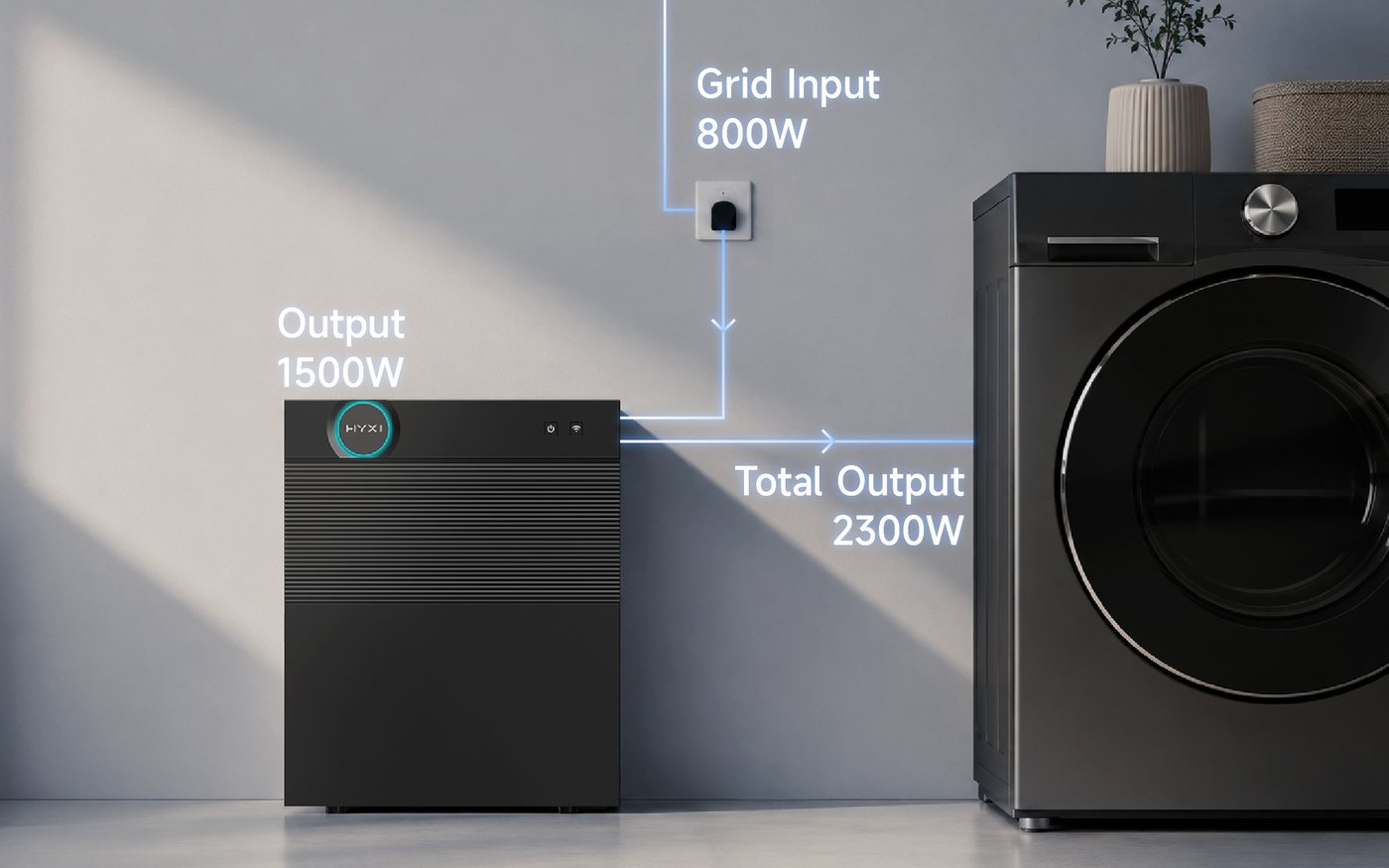
1,500 W is what the battery delivers by itself — a fridge, a router, the lights, a couple of fans and a television, all at once. When the grid is present it passes a further 800 W straight through, so the two together carry 2,300 W: enough to add a microwave or a kettle to that list without tripping anything.
| What you are running | Draw | Roughly, on one charge |
|---|---|---|
| Fridge and wifi router | ~160 W | 17–18 hours |
| Fridge, wifi, six LED lights, two fans | ~340 W | 8–9 hours |
| All of the above, plus a television | ~440 W | 6–7 hours |
| A single 1,000 W appliance | 1,000 W | just under 3 hours |
Indicative only. Worked from the 3,014 Wh nominal capacity and typical appliance draws — not from a survey of your house. What you actually get depends on your appliances, their age, and how often the fridge compressor decides to run. We size it against your real load before we quote.
Rated to +55 °C and 5–95 % humidity in an IP66 case, cooled by nothing but its own fins. There is no fan to seize and no filter to clean — the two things that fail first in a Mauritian summer. Hyxipower also rate it down to −20 °C, which is a specification this island will never once put to the test.
Inside, five layers of protection over automotive-grade A+ cells, and an aerosol suppressant sealed in the case that smothers a cell fault before it can travel. The battery management system watches over-current, over-voltage, over-temperature and short circuit independently of one another, and balances the cells so the weakest one does not set the ceiling for the whole pack.
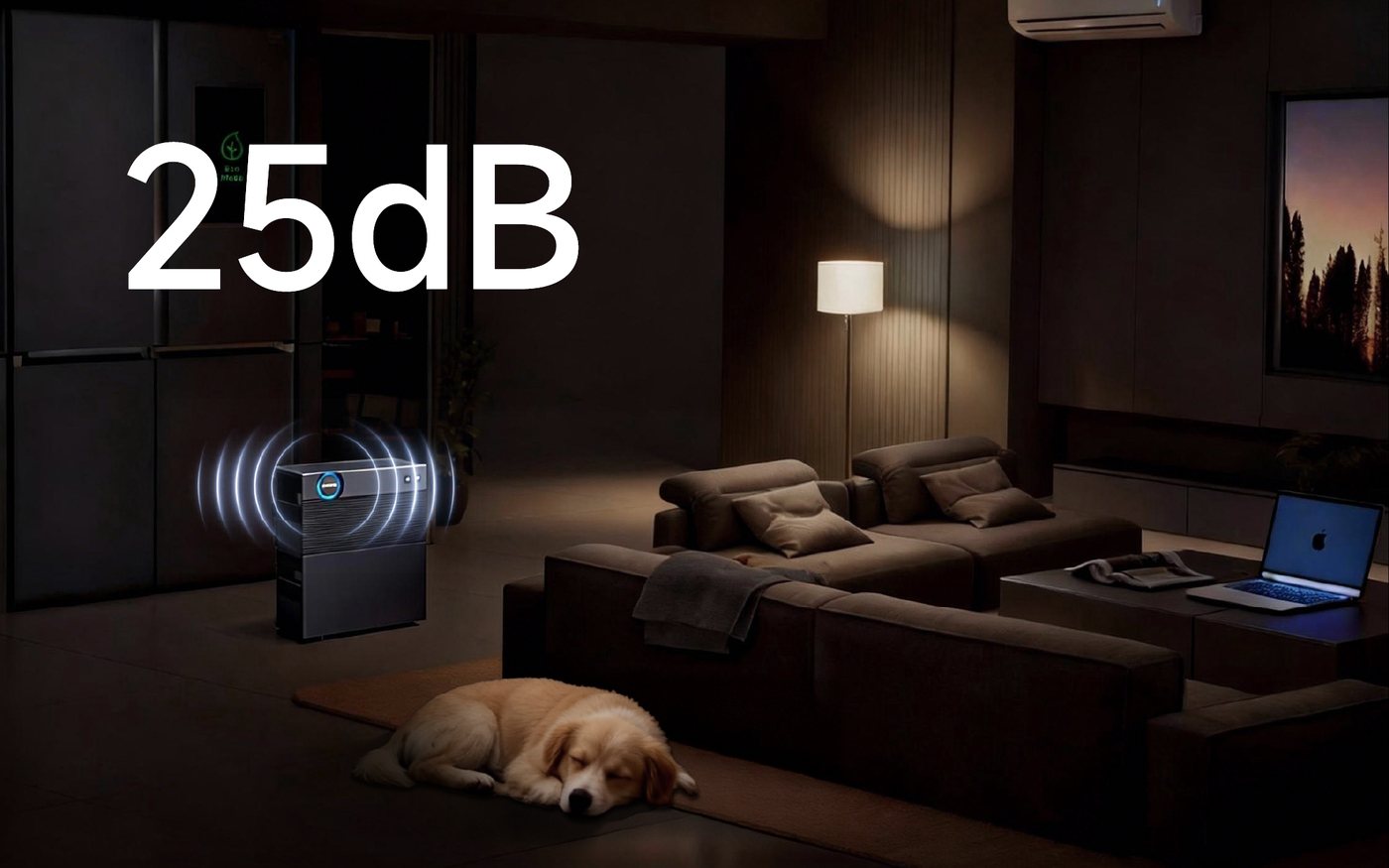
It runs at 25 dB — quieter than a fridge, quiet enough to live in a hallway or a bedroom cupboard rather than being exiled to a shed.
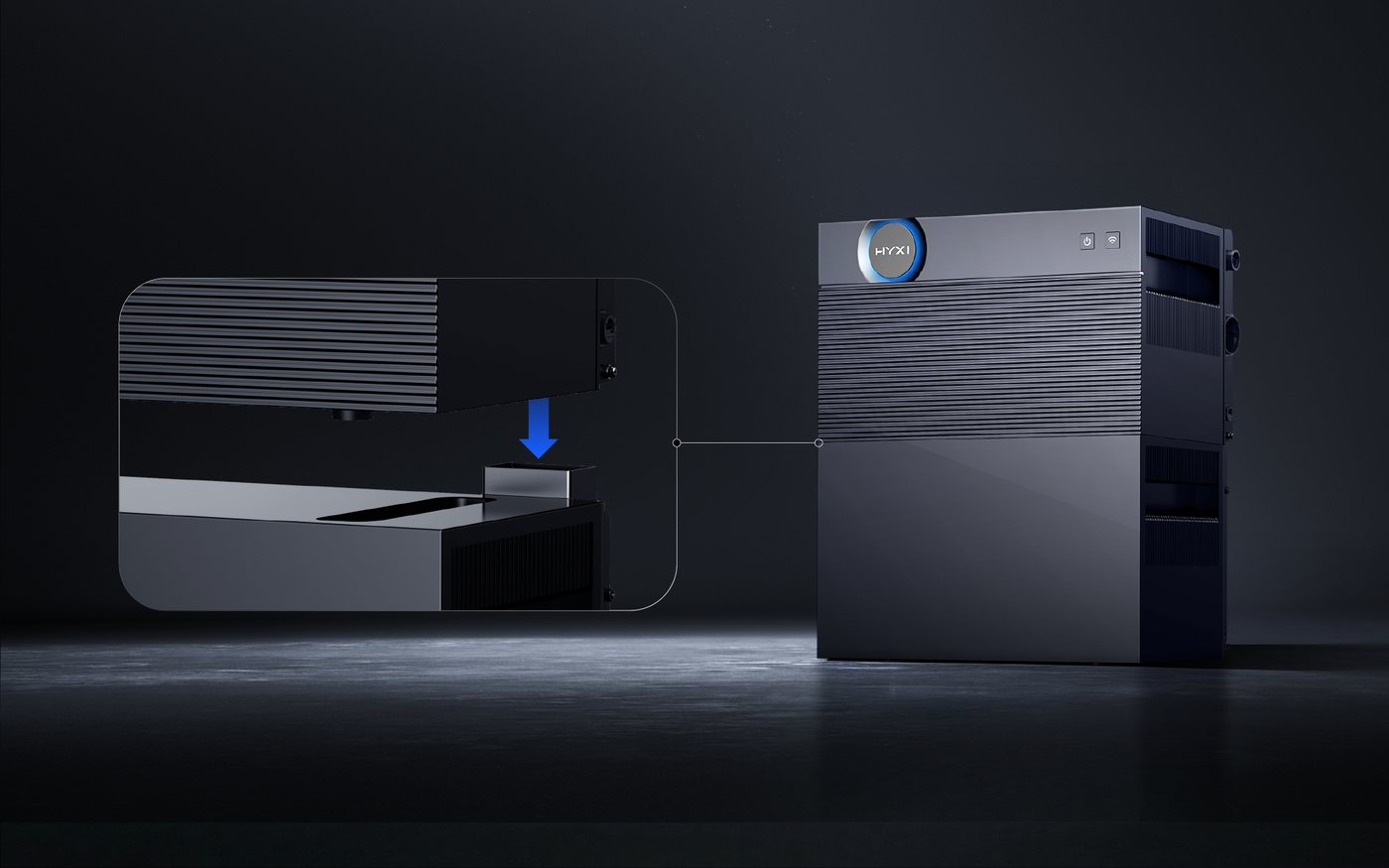
One Halo PV holds 3.0 kWh. Each MS3000B expansion pack adds another 3.0 kWh and stacks underneath it — up to five of them, for 18.1 kWh, on exactly the same 460 × 281 mm of floor. The stack talks to itself over CAN and behaves as a single battery: nothing to reconfigure, nothing to throw away, no second inverter to buy.
This is the part worth understanding before you choose a size. Most storage decisions are made once, under pressure, on a guess about a household you have not measured yet. Here the guess costs nothing — start at 3 kWh, watch a few bills, and add what the evidence says you need.
| Solar input (PV) | |
|---|---|
| Max. PV input power | 2,400 W |
| MPP trackers | 4 |
| MPPT voltage range | 16 – 60 V |
| Max. PV input voltage | 60 V |
| Start-up voltage | 20 V |
| Max. PV input current | 4 × 18 A |
| Output — off-grid | |
| Rated AC output power | 1,500 W |
| Max. bypass output power | 2,300 VA |
| Output voltage / frequency | 220 / 230 / 240 V, 50 / 60 Hz |
| Output — on-grid | |
| Nominal output apparent power | 800 W / 1,500 W* |
| Max. AC input apparent power | 1,500 VA |
| Power factor range | 0.8 leading to 0.8 lagging |
| THDi at rated power | < 3 % |
| Battery | |
| Chemistry | LiFePO4 |
| Nominal energy | 3,014.4 Wh |
| Nominal voltage | 9.6 V |
| Max. charge / discharge power | 1,500 VA / 1,500 VA |
| Cycle life | ≥ 10,000 (25 °C, to 60 % capacity) |
| Expansion | Up to 5 × MS3000B — 18.1 kWh total |
| Physical and environmental | |
| Dimensions (W × D × H) | 460 × 281 × 279 mm |
| Weight | 28.5 kg |
| Ingress protection | IP66 |
| Operating temperature | −20 to +55 °C |
| Humidity | 5 – 95 %, non-condensing |
| Cooling | Natural convection — no fan |
| Noise | 25 dB |
| Communication | Wi-Fi and Bluetooth · LED and app |
| Standards | |
| Safety | IEC 62109-1 / -2 |
| Cells and transport | IEC 62619, UN 38.3 |
| Models covered | HYX-MS3000 · MS3000-BP-1…5 · MS3000B |
* The 1,500 W on-grid setting is a premium function. Enabling it must comply with local regulations and may only be done by authorised personnel — we advise on it as part of the quotation. Figures are from the Hyxipower datasheet V1.6 and are subject to change without notice.
No. Without panels it charges from the grid and works as a reserve — the fridge and the lights keep going through a cut, and nothing about your wiring changes. Panels are what turn it from a backup into a system that pays for itself, and you can add up to 2,400 W of them whenever you are ready.
It is designed to power your own loads rather than to export to the grid, which is the simplest case. Whether anything is owed to the CEB depends on how it is configured and on what is already on your installation — so we check that against your situation before quoting, and where paperwork is due we prepare it. We would rather tell you the answer than let you discover it.
A small inverter unit, yes. A 12,000 BTU split draws roughly 1,000–1,200 W once it is running, which sits inside the 1,500 W output — but start-up briefly demands a good deal more, and that is where the 2,300 W available with the grid present matters. We check the start-up current of the actual unit before saying yes, because the honest answer depends on the machine and not on the category.
The cells are rated for more than 10,000 full cycles before falling to 60 % of their original capacity. At one full cycle a day that is a great many years — but the number to plan against is the warranty, which is ten years, and which is what we stand behind rather than what the laboratory measured.
Indoors or under cover, on a flat floor, near the socket that feeds what you want backed up. IP66 means rain and dust do not bother it, but shade and shelter still extend the life of any battery in this climate. It is 28.5 kg and the size of a small suitcase, so a utility room, a hallway cupboard or a covered veranda all work.
The Halo 5 is AC-coupled: it stores and delivers power, and it takes its charge from your existing supply. The Halo PV adds four solar inputs, so it can generate as well as store — a complete small system rather than a battery. If you have no panels and no intention of adding any, the Halo 5 is the simpler answer; if there is any chance of solar later, start here.
Tell us what you want kept running and we will size it against your real load — the Halo PV if it fits, and something else if it does not.
Request a quote