
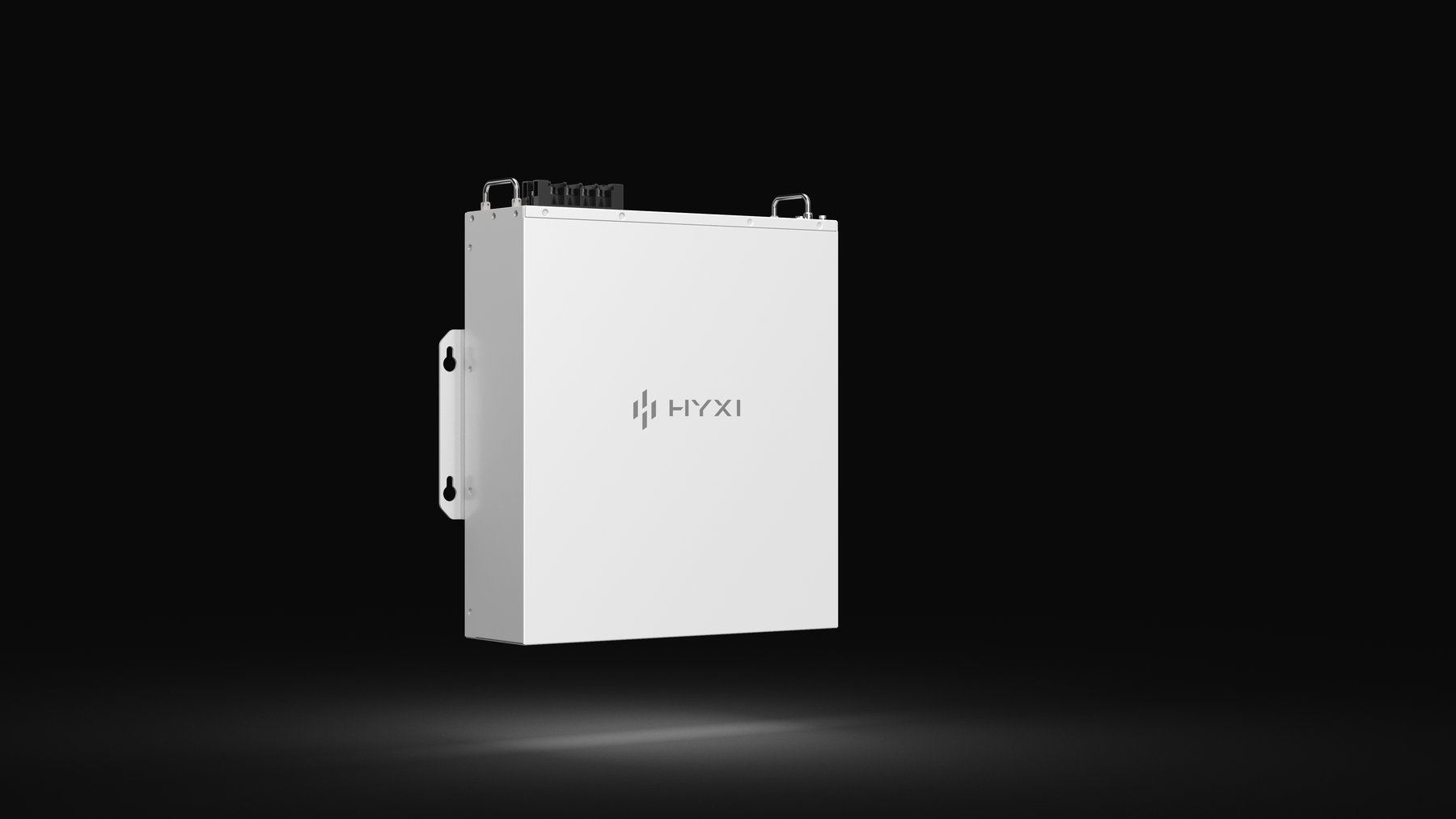
5.12 kWh a module, 51.2 V, sixteen of them in parallel if you need it — up to 81.9 kWh on one bus. This is the battery under most Mauritian villa installations, and the reason is that it is boring in all the right ways.
The HYX-E50-LR is a 5.12 kWh LiFePO4 module at 51.2 V — low voltage, which in a battery means under about 60 V and therefore below the threshold where the wiring itself becomes dangerous to work near. It is the standard residential bus, and it is what the great majority of hybrid inverters expect to see.
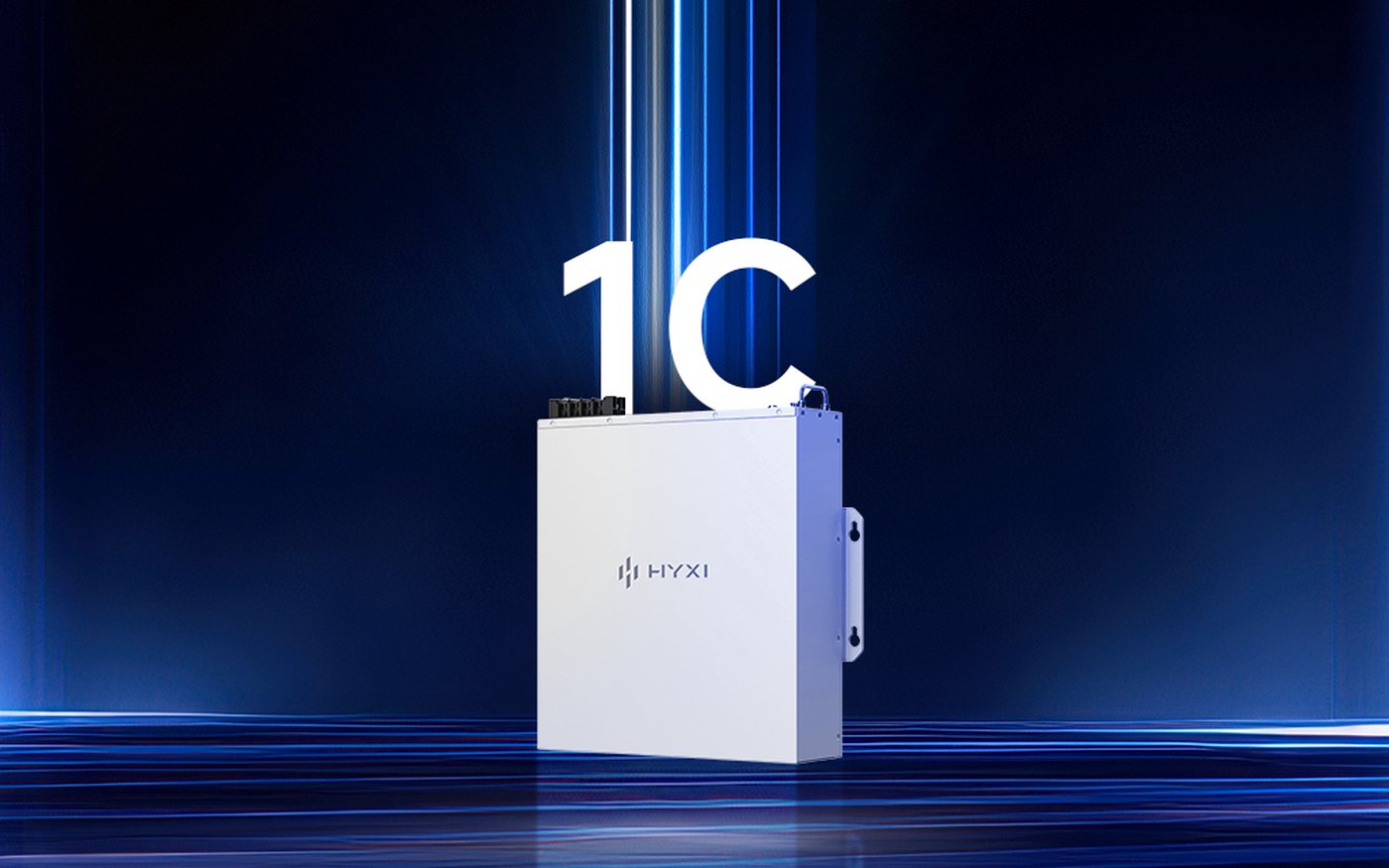
What sets this one apart is current. It is built on 1 C cells: 100 Ah of capacity that will accept 100 A continuously, so a module charges fully in about an hour and delivers 5 kW on its own. Most low-voltage modules of this size need two of them in parallel to reach the same power, which is two cabinets, two sets of cabling and twice the wall.
Sixteen modules will run in parallel for 81.92 kWh, which takes it well past domestic use and into small commercial territory — a guest house, a clinic, a workshop that cannot afford to stop.
This is the default battery behind a residential hybrid inverter. Start at one module, add them as the household grows or the bill says to — the inverter does not have to change.
1 C means a module takes a full charge in about an hour. On a short winter day, or between two cuts, the battery that refills fastest is the one that is actually there when you need it.
Sixteen modules is 81.9 kWh. A guest house, a clinic, a cold room, a workshop — enough to carry a working day, on a bus a domestic electrician can safely work on.
IP20 means this module is built for a plant room, a garage or a utility cupboard, not for a wall facing the sea. That is a deliberate trade: no sealed enclosure means better cooling and easier service.
Not against a wish. A year of CEB bills tells us what the evening actually costs you, which is the number that decides how many modules earn their place. Buying storage you never discharge is the commonest way to overspend on solar.
Floor-standing or wall-mounted, indoors, wired to the inverter over CAN or RS485 so the two agree on state of charge, current limits and temperature. The BMS in the module is what refuses a bad charge, not the inverter.
Up to sixteen modules on one bus. Each new module joins the existing stack rather than replacing it, which is why we would rather sell you two now and two next year than talk you into eight today.
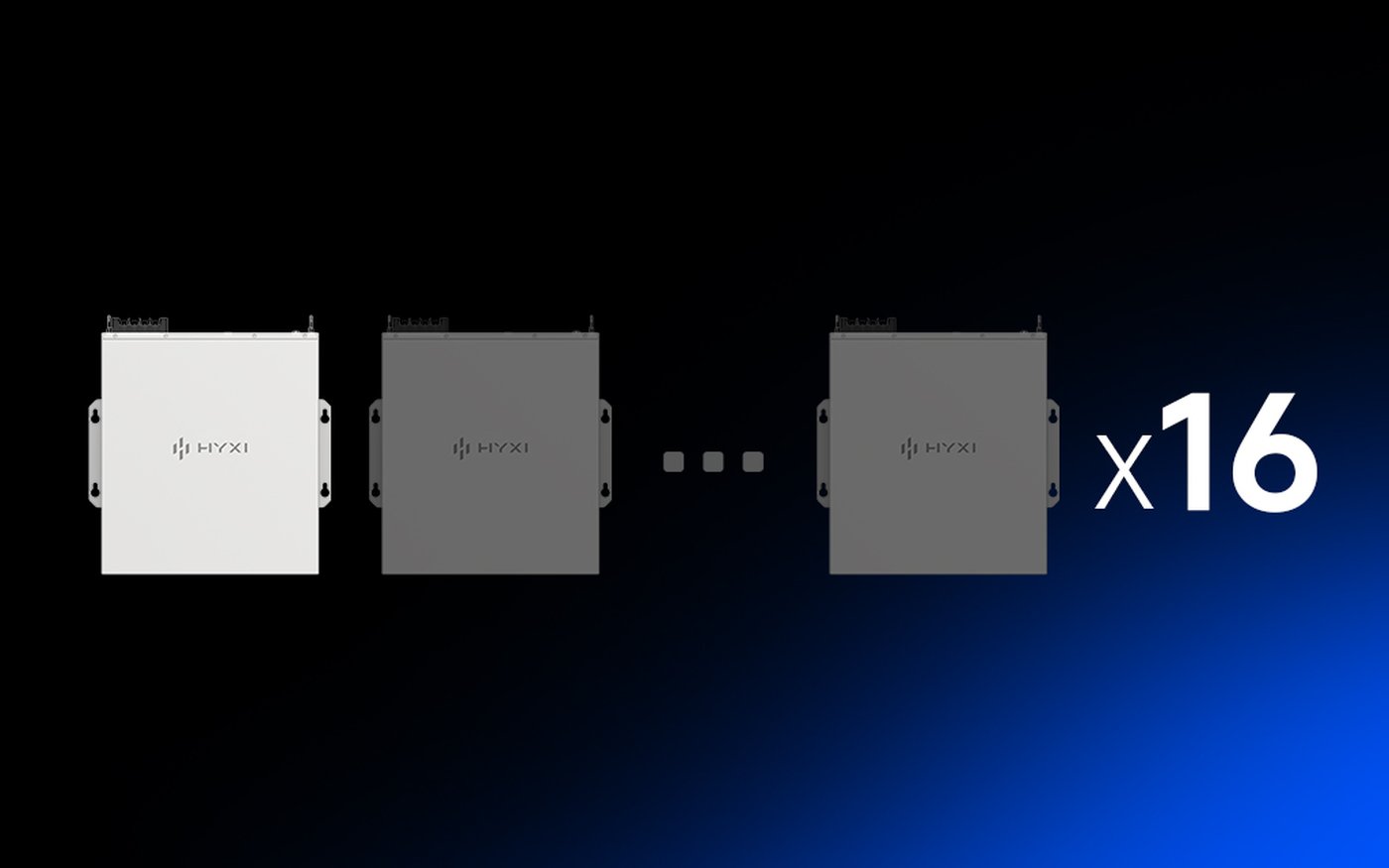
A stack is not a compromise. Each module carries its own battery management, so adding one adds capacity and current together — sixteen modules is 81.92 kWh and 1,600 A of continuous capability, on a bus that never leaves low voltage.
The practical consequence for a household is that the decision is reversible. Two modules now is not a bet on what your consumption will be in three years; it is a starting point that costs you nothing to be wrong about.
The cells are low-resistance 1 C cells, so a module will take 100 A continuously — its whole capacity in roughly an hour, against three or four for a conventional 0.3 C pack.
That matters more here than the brochure suggests. Mauritian generation is concentrated into a bright middle of the day; a battery that cannot absorb it fast enough simply lets the surplus go to the grid. And after a cut, a battery that refills in an hour is ready for the next one.
The same headroom means one module puts out 5 kW by itself, so a system that would otherwise need two modules for power rather than for energy needs only one.
| Performance | |
|---|---|
| Battery type | Lithium iron phosphate (LiFePO4) |
| Rated energy | 5.12 kWh |
| Rated voltage | 51.2 V DC |
| Rated capacity | 100 Ah (1 C) |
| Rated charge / discharge current | 50 A / 50 A |
| Max. continuous charge / discharge current | 100 A / 100 A |
| Cycle life | 6,000 cycles (90 % DoD, to 70 % capacity) |
| Parallel connection | Up to 16 units — 81.92 kWh |
| Interfaces | |
| Communication | RS485 / CAN 2.0 |
| Display | LED |
| Protection | Over-temperature, over-current, short circuit, over-charge, over-discharge |
| Physical and environmental | |
| Dimensions (W × H × D) | 443 × 133 × 492 mm |
| Weight | 41 kg |
| Ingress protection | IP20 — indoor installation |
| Charge temperature | 0 to +55 °C |
| Discharge temperature | −10 to +50 °C |
| Relative humidity | 5 – 95 % |
| Altitude | ≤ 3,000 m |
| Cooling | Natural convection |
| Installation | Floor-standing or wall-mounted |
| Standards | |
| Battery system | IEC 62619:2022 |
| Model | HYX-E50-LR |
Figures are from the Hyxipower HYX-E50-LR datasheet V1.0 and are subject to change without notice. The 16 kWh module on our shop page is the larger HYX-E160-L from the same low-voltage family; ask us for its sheet if that is the size you are weighing up.
Below about 20 kWh, low voltage is almost always the right answer: cheaper per kWh at small sizes, simpler to work on, and safe for a domestic electrician to handle. High voltage moves the same energy at a fraction of the current, so it wins on efficiency and cabling once a system gets large. The honest dividing line is around 20 kWh, and it also decides your warranty — five years on low voltage, ten on high.
No. IP20 is an indoor rating and we will not install it anywhere it can be rained on or reached by salt air. A garage, a plant room or a utility cupboard is right. If the only available space is outdoors, say so early and we will quote a different product rather than a different location.
That the pack still holds 70 % of its original capacity after 6,000 full charge-discharge cycles at 90 % depth of discharge. At one cycle a day that is over sixteen years. It is a laboratory figure; the number we stand behind is the warranty.
Not with another brand, and not with modules of a different capacity or age on the same bus. Cells in parallel share current, and mismatched packs make the newest one do the most work. Adding identical modules to an existing HYXI stack is exactly what it is designed for.
No — this is a battery, not a system. It connects to a hybrid inverter over CAN or RS485. If you are starting from nothing we quote the pair together, because the inverter decides what the battery is allowed to do.
Send a year of CEB bills and we will tell you how many modules actually earn their place — which is usually fewer than people expect, and occasionally more.
Request a quote