
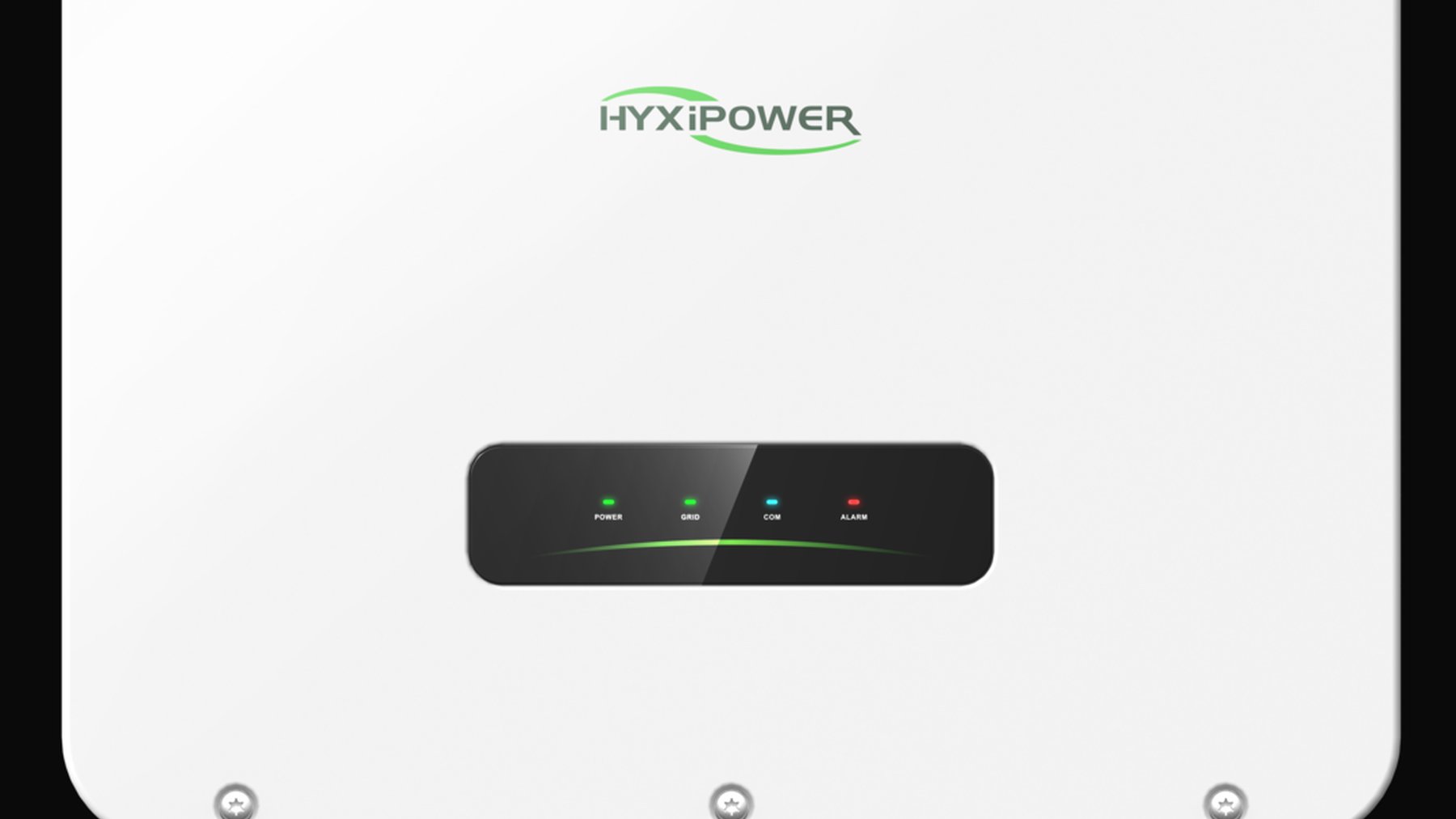
29.9 to 50 kW a unit, up to 98.6 % efficient, IP66, with arc-fault detection and a 40 A input designed for the high-current bifacial modules everyone is now buying. This is what sits between a factory roof and the meter.
A string inverter takes the direct current from a series of panels and turns it into three-phase alternating current at 400 V. On anything above a large villa it is the standard architecture, and the reasons are cost per kilowatt and the fact that one unit is one thing to maintain.
The S29K9–50K-T range accepts up to 1,100 V and 40 A per tracker, which matters more than it used to: modern bifacial modules push far more current than the 12 A designs most inverters were built around, and an undersized input quietly clips your best hours.
For a hotel, a factory or a cold store the number that decides everything is uptime. Type II surge protection on both DC and AC sides, IP66 against salt and rain, smart air cooling, and AFCI arc-fault detection that will shut the array down in half a second.
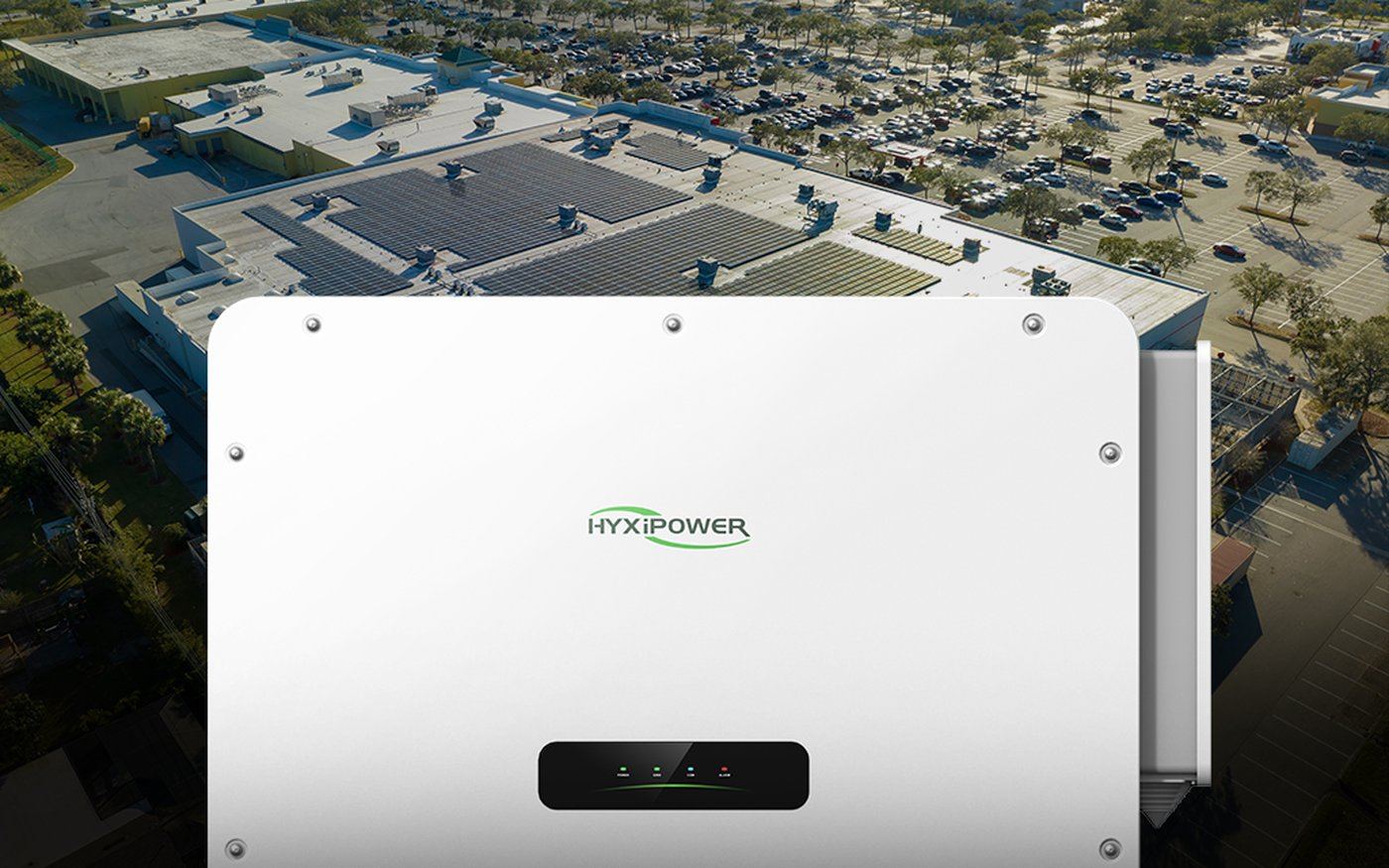
Hotels, factories, warehouses, supermarkets — anywhere there is a lot of unbroken roof and a three-phase supply. One 50 kW unit does the work that would take a shelf of residential inverters.
A 40 A tracker input is sized for what current panels actually produce. Pair a 620 W bifacial array with an inverter designed around 12 A strings and you pay for generation you then throw away.
IP66, over 1,400 cumulative qualification tests, and Type II surge protection on both sides. Mauritius is a small island: almost every commercial roof is a coastal roof.
Arc-fault detection scans up to 300 m of DC cabling and shuts down in 0.5 s. On a roof above stock, guests or production, that is not a specification — it is an insurance conversation.
Commercial solar is sized against a consumption profile — when the chillers run, when the shift starts, what the demand charge is doing. The roof sets a ceiling; the load curve sets the answer. We ask for a year of readings before we draw anything.
String layout, cable sizing, protection, mounting for the roof you actually have, and the CEB paperwork. Three or four MPPT trackers per unit depending on the model, so the array can be split across orientations without losing to the weakest string.
RS485, 4G, Wi-Fi or power-line carrier, with module-level visualisation when optimisers are fitted and IV-curve diagnostics for finding a fault without climbing. Firmware updates go out over the air. We monitor it; you get told when something needs doing.
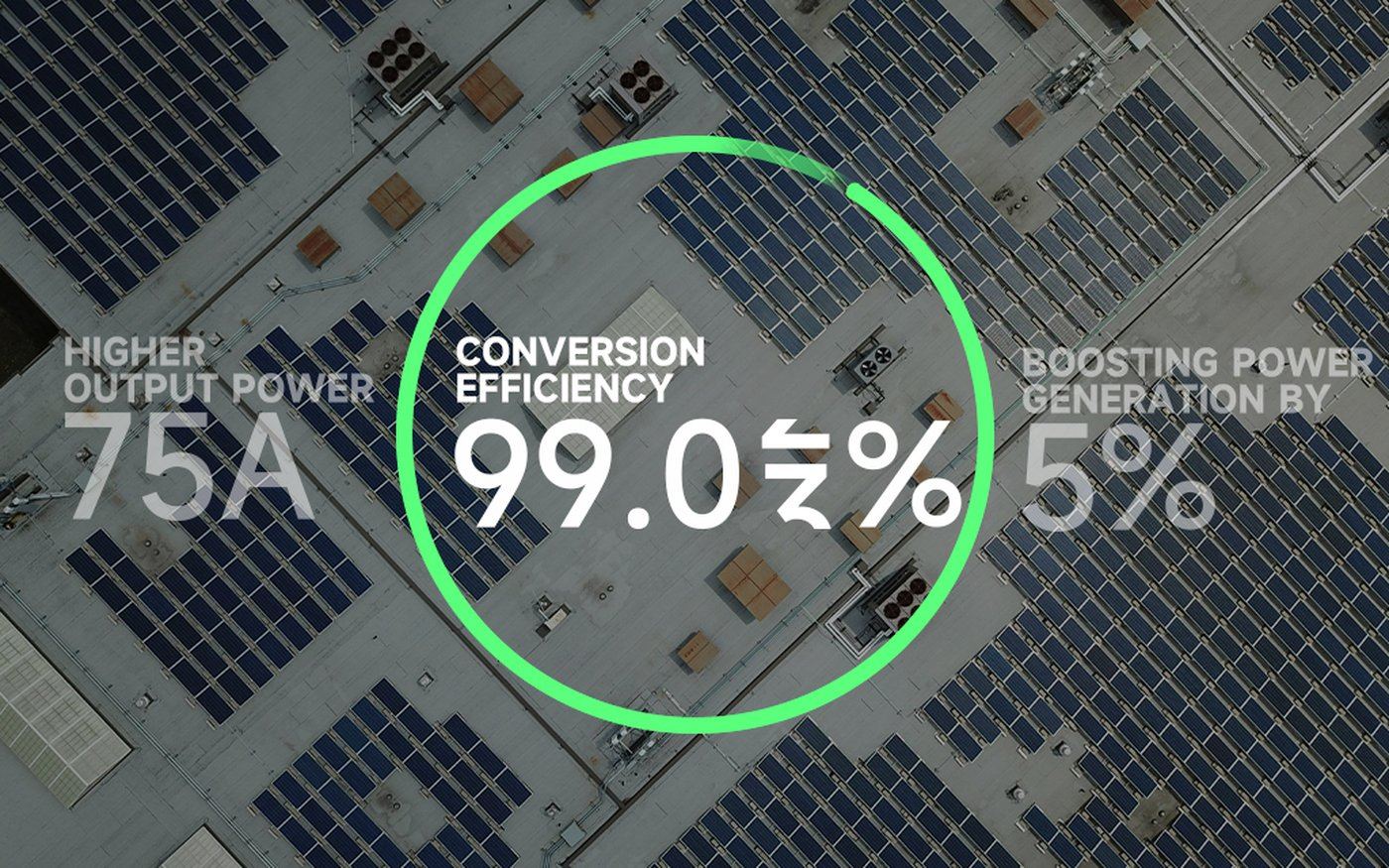
Two different efficiencies matter and they are often confused. Conversion efficiency — 98.6 % at maximum, 98.1 % European weighted — is how much of the DC arriving becomes AC leaving. MPPT efficiency, 99.9 %, is how well the inverter finds the array’s best operating point as cloud and temperature move it.
The second is where a tropical climate takes its toll. Irradiance here changes fast; an inverter that hunts slowly for the maximum power point spends its afternoon slightly behind the array. Built-in PID recovery runs at night to reverse potential-induced degradation before it becomes permanent.
At 615 × 460 × 268.5 mm and 44 kg this is a genuinely compact unit for 50 kW, and that shows up in the installed cost rather than in the brochure — lighter mounting, simpler handling, less structural work on a roof that was not designed for plant.
It is cooled by smart air cooling rather than a fixed fan, runs from −30 to +60 °C and up to 4,000 m, and carries a full protection set: anti-islanding, residual current monitoring, DC reverse polarity, DC switch, AC short circuit, overvoltage and overcurrent, and ground fault detection.
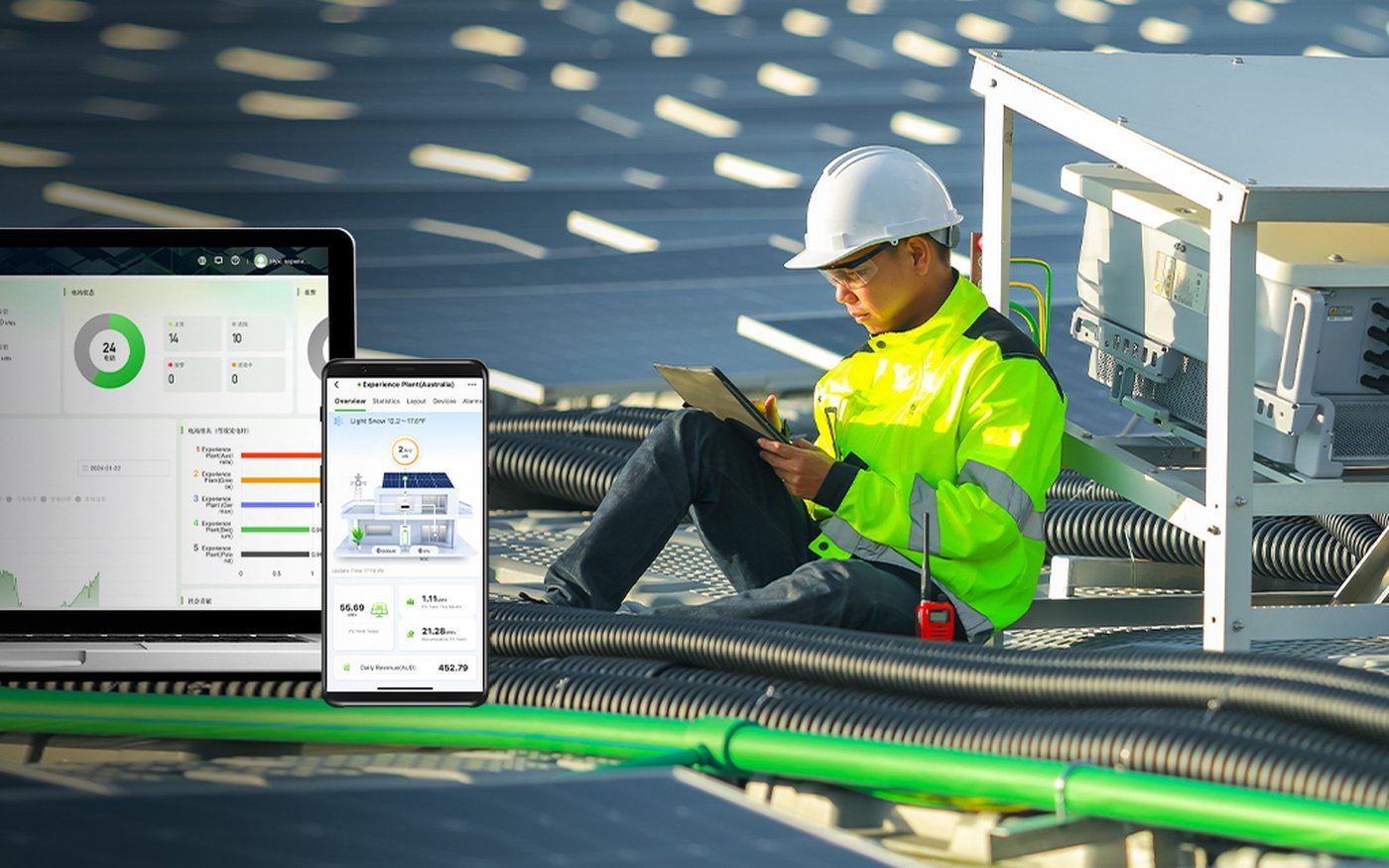
Commercial solar fails quietly. A string goes down, generation drops 8 %, and nobody notices for a quarter because the bill still looks broadly like a bill. Module-level monitoring and intelligent IV diagnostics turn that into an alarm with a location attached.
The app commissions the system, maps the layout and then stays useful: real-time data, remote firmware, and the ability to answer "is it working?" without sending anybody up a ladder.
| PV input | |
|---|---|
| Max. input power | 48 – 80 kW, by model |
| Max. input voltage | 1,100 V |
| Nominal input voltage | 600 V |
| Start-up voltage | 160 V |
| MPPT operating range | 140 – 1,000 V |
| MPPT full-load range | 450 – 850 V |
| Max. current per MPPT | 40 A |
| Max. short-circuit current | 50 A |
| Number of MPP trackers | 3 or 4, by model |
| AC output | |
| Nominal output power | 29.9 / 30 / 33 / 36 / 40 / 50 kW |
| Max. apparent power | 29.9 – 55 kVA, by model |
| Nominal output voltage | 3L / N / PE, 220 / 380 V or 230 / 400 V |
| Grid frequency | 50 / 60 Hz |
| Power factor | 0.8 lead – 0.8 lag |
| THDi | < 3 % |
| Efficiency | |
| Max. efficiency | 98.6 % |
| European weighted efficiency | 98.1 % |
| MPPT efficiency | 99.9 % |
| Protection | |
| DC / AC surge protection | Type II |
| Arc-fault detection (AFCI) | Optional — 300 m detection, 0.5 s shutdown |
| PID recovery | Optional |
| Included | Anti-islanding, residual current monitoring, DC reverse polarity, DC switch, AC short circuit, AC over-voltage and over-current, ground fault detection |
| Physical and environmental | |
| Dimensions (W × H × D) | 615 × 460 × 268.5 mm |
| Weight | 44 kg |
| Ingress protection | IP66 |
| Operating temperature | −30 to +60 °C |
| Relative humidity | 0 – 100 % |
| Altitude | 4,000 m |
| Cooling | Smart air cooling |
| Communication | RS485 / 4G / Wi-Fi / power-line carrier |
| Topology | Non-isolated |
Figures are from the Hyxipower HYX-S(29.9-50)K-T datasheet V1.1 and are subject to change without notice. The wider three-phase family runs to 350 kW; for anything above 50 kW we quote from the larger sheets.
That is set by the array, not the roof area. A 50 kW unit accepts up to 80 kW of panels, because in Mauritius an array almost never produces its rated output at once — some over-sizing on the DC side is normal and profitable. We work it out from your load profile and the roof, and we would rather explain the ratio than hand you a number.
It is optional on this range and we recommend it on almost every commercial roof. An arc fault in DC cabling is the realistic fire risk in a solar installation, and 300 m of detection with a half-second shutdown is a cheap answer to it. If there is stock, production or people underneath, we would specify it without asking.
A commercial installation of this size is a formal grid-connection process, and we run it. Application, technical submission, metering and the commissioning inspection are part of what we quote, not an afterthought you discover later.
Cost per kilowatt, decisively, at this scale — nobody roofs a factory with microinverters. What you give up is per-panel tolerance of shade and per-panel monitoring, which is why we sometimes fit optimisers on the strings that have a problem rather than changing the whole architecture for them.
The system stops, which is the honest downside of central conversion and the reason monitoring matters. It is one unit to replace rather than forty, we hold the common models, and the protection set is designed so that a fault outside the inverter does not take the inverter with it.
Commercial solar is designed against a load curve, not a roof plan. Twelve months of CEB readings and a look at the roof is enough for us to tell you what it would cost and what it would save.
Request a quote